Everyone has heard the famous saying “you are what you eat”, but never expected it to be so literal. This statement was introduced by the American nutritionist Victor Lindahr in the 1930s and gained popularity […]
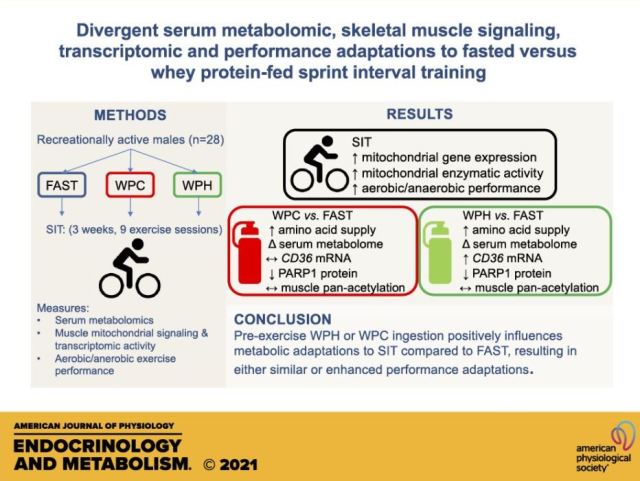
Research Impact: Current literature has investigated the nutritional regulation of acute and chronic exercise-induced metabolic adaptations in muscle following endurance exercise, principally comparing the impact of training in fasted and carbohydrate-fed (CHO) conditions. Alternative strategies […]
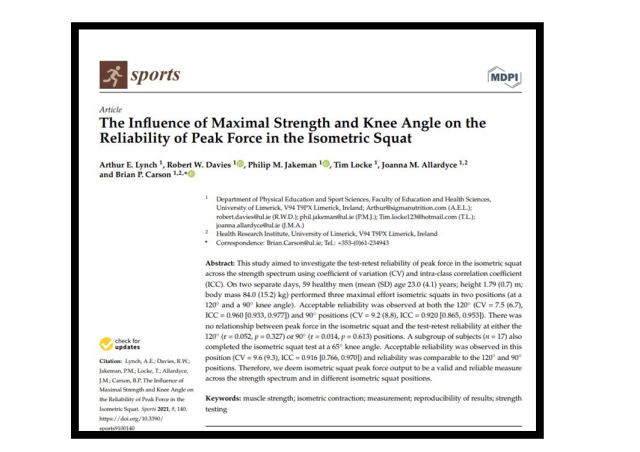
Research Impact: In this paper we document the relationship between maximal strength level and the reliability of an isometric squat test in two isometric squat positions (120° and 90° knee angle) using a heterogeneous sample of […]
Research Impact: Supplementing post-exercise carbohydrate (CHO) intake with protein has been suggested to enhance recovery from endurance exercise. The aim of this study (in a double-blind crossover design) was to investigate whether adding protein to […]
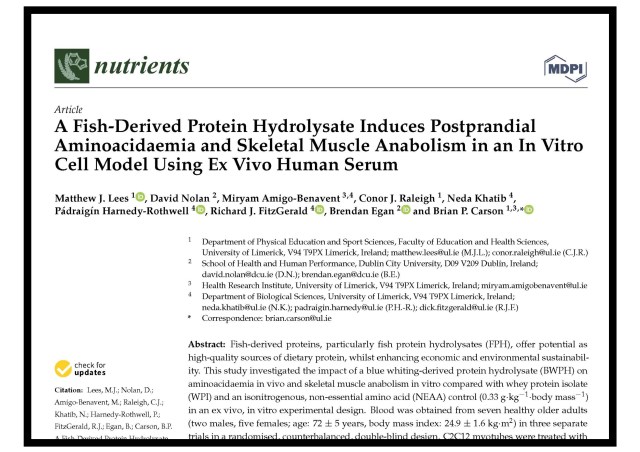
Research Impact: Fish-derived proteins, particularly fish protein hydrolysates (FPH), offer potential as high-quality sources of dietary protein whilst enhancing economic and environmental sustainability. In this study we worked with industry partners Bio-marine Ingredients Ireland to […]
As we embark on a new calendar year, it is a good time to reflect on what we have achieved, celebrate our successes and look to the future of research in the PESS department. In […]
Athlete nutritional practices are very often primarily concerned with improving performance via weight loss and/or a metabolic adaption while bone health is often given less consideration. A proactive approach to bone health can be more […]
Research Impact: Psychological consequences of sprint interval training (SIT), a potential time-efficient exercise strategy for which physiological adaptations are supported, is understudied, particularly effects on anxiety-related constructs. This is the first investigation of state anxiety […]
Research Impact: The benefits of physical activity (PA) are widespread for all children, including those with disabilities. However, despite these benefits children with disabilities continue to be restricted in their participation, have lower levels of […]