
Elite heavyweight rowers have a unique combination of physical characteristics – they are tall individuals (186cm for males and ≥ 175 cm for females) with a large aerobic capacity and high strength levels. In prominent […]

Elite heavyweight rowers have a unique combination of physical characteristics – they are tall individuals (186cm for males and ≥ 175 cm for females) with a large aerobic capacity and high strength levels. In prominent […]
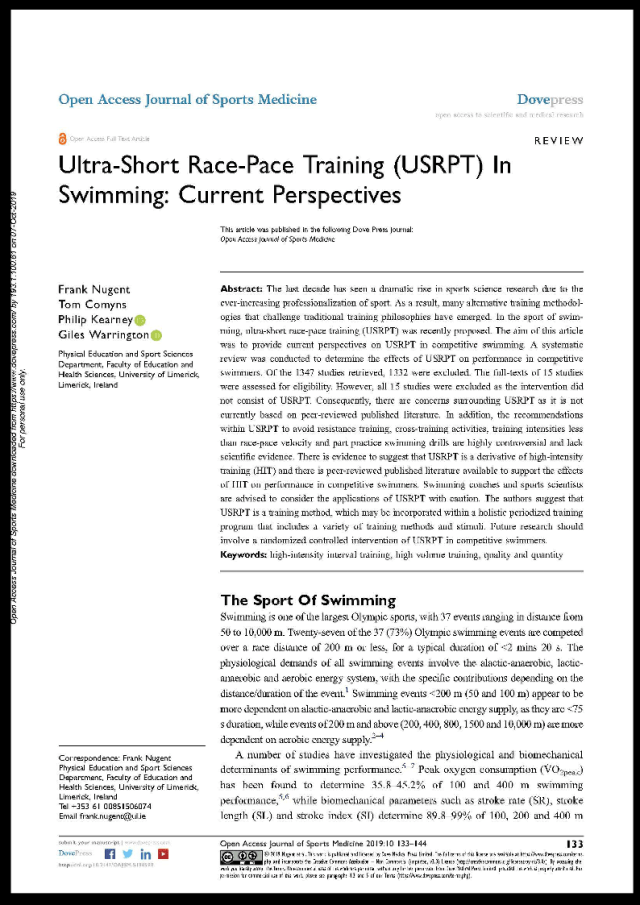
Research Impact: Ultra-short race-pace training (USRPT) was recently proposed as a new and alternative training methodology that challenges traditional training philosophies in the sport of swimming. The aim of this article was to provide current […]
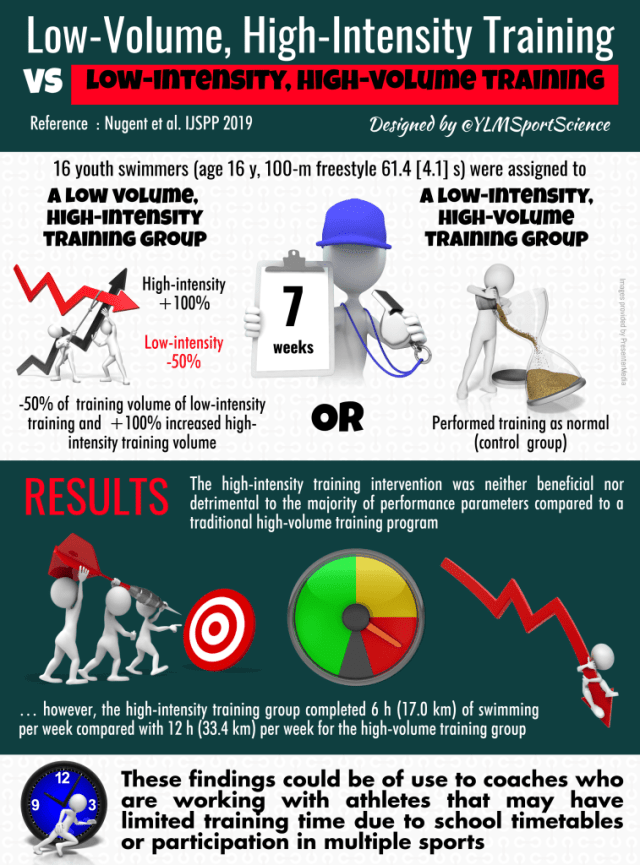
Research Impact: The merits of low-volume, high-intensity training (HIT) versus low-intensity, high-volume training (HVT) are a widely debated topic in competitive swimming. This study investigated the effects of a 7 week HIT intervention on physiological, biomechanical and swimming […]

Research Impact Summary: The purpose of this study was to investigate the effects of increased training volume during a 10 day training camp on competitive performance and internal training load (ITL). In addition, coach and […]

Research Impact: Youth swimmers, aged 7 – 13 years, are an athletic population that can benefit from a strength and conditioning (S&C) programme which caters for their developmental and sports specific needs. This article provides considerations […]

This blog post details some of my opinions around the use of high-intensity interval training (HIT) for those participating at recreational and competitive level endurance events in sports such as running, rowing, cycling, swimming, triathlon […]

Research Impact: The debate over low-volume, high-intensity training versus high-volume, low-intensity training, commonly known as Quality versus Quantity respectively, is a frequent topic of discussion among swimming coaches and academics. The aim was to explore […]

Research Impact: Competitive swimmers are widely acknowledged to perform high training volumes from a young age. It is not uncommon for competitive youth swimmers to train 12 – 18 hours per week.Presently, a popular topic […]
 PESS News & Information