

Choosing to study Sport and Exercise Science (SES) in UL was the best decision I made as it provided me with a foundation to build on and further my studies in the area of Human Nutrition and Dietetics.
I graduated from the BSc in SES in 2021 and then went on to pursue my goal of becoming a dietitian and completed the 2-year MSc in Human Nutrition and Dietetics in UL this year. Due to the wide-ranging subjects taught on the BSc SES programme, it can be daunting to know what career trajectory to choose afterwards, but I hope to shed some light into one pathway you could choose following graduation with a BSc in SES – that pathway is dietetics!
Why did I choose to pursue dietetics after sport science?
Having always had an interest in sports nutrition which stemmed from my love of sport growing up (which led me to studying sport and exercise science in UL), I always had hoped to work in nutrition in some capacity. In particular prior to completing and during my BSc in SES, I found the link between nutrition and performance fascinating and was an area I wished to explore further. In addition to exploring nutrition and its impact on performance, I also wanted to be able to help athletes from a health perspective. This was an area I had limited knowledge in and felt dietetics would be the best fit, allowing me to pursue this and applying the science of nutrition in health and disease. In essence I wanted to combine all my interests – food, health, healthy eating, biochemistry, disease prevention and performance nutrition – and be able to educate others around nutrition to help live a healthier lifestyle through behaviour and dietary change. I want to work with people and have a positive impact on their lives and I felt nutrition was where I could provide this impact. Therefore, I choose to pursue a career in dietetics.
Sport science modules that led to an interest in dietetics:
One such module that sparked my interest further in nutrition during the SES programme was the Nutrition, Exercise, Metabolism and Sports Performance module delivered in Year 3 of the course. During my third year in the BSc, this is where I realised I wanted to be a dietitian. This module gave me knowledge on the fundamentals of nutrition and energy balance gaining insight into nutrient intake and the changes in human energy metabolism following exercise as well as nutrient timing and its impact on sport performance.
Additionally, in order to fulfil requirements for the MSc and complete the MSc, prerequisite subjects needed to be met in biochemistry and physiology which I gained through the SES programme. The following SES modules as a result were hugely beneficial and valuable equipping me with essential knowledge prior to beginning my career in dietetics:
- Sport and Exercise Sciences: Transition
- Human Physiological Systems for Sport and Exercise Science
- Introduction to Biochemistry
- Physiology Muscle in Movement
- Support Systems to Muscle Contraction
Finally, during research modules across the SES programme, I was fortunate enough to work on nutrition-based projects. My advice to any student in SES is to get involved in projects in your area of interest if at all possible. As part of the Fundamental Concepts of Human Research and their Application module in Year 3, I worked on a European funded project LifeAge with Dr Catherine Norton. This project aimed to investigate the importance of a healthy lifestyle including nutrition and physical activity to achieve a better quality of life in older adults. Specifically, as part of this, I investigated the Adherence to a Mediterranean Diet and its impact on Physical Function in a Non-Mediterranean Country on a subset of the data collected for the project which was very interesting and valuable for my dietetic career going forward. Also, as part of my FYP, I investigated the Prevalence, Patterns and Appropriateness of Dietary Supplements in male Intercounty Gaelic football players. This was an interesting project which I thoroughly enjoyed working on.
How sport science has been valuable to the MSc in dietetics?
Not only has sport science provided me with valuable knowledge in nutrition, physiology, biochemistry and exercise application, the skills gained have also been hugely valuable both throughout my MSc as well as during the early stages of my dietetic career. During modules of Functional Anatomy and Nutrition Exercise, Metabolism and Sports Performance, I had the opportunity to enhance my skills of anthropometric testing measuring skinfolds which I have used during my MSc in dietetics. Additionally, the SES programme afforded me the opportunity to improve and enhance many skills. These include communication, presentation, teamwork, problem-solving, critical analysis, academic writing, research of evidence-based and research dissemination. Of most note, the SES programme equipped me with skills in the application of theory and science to practice and real-life scenarios. During my final clinical placement in dietetics, I found that my SES degree came even more into play where not only was I helping service users from a nutrition point of view, but I was also able to advise them regarding physical activity and exercise, which proved to be hugely beneficial making me a more rounded dietitian.
My advice to all students completing the SES programme, enjoy the experience, seek opportunities, get involved. Use volunteer opportunities and cooperative education as a chance to focus on your interests and gain hands on experience and skills in the areas you are interested in, be it in nutrition and dietetics, strength and conditioning, psychology or physiotherapy. All the best in your careers following the SES programme! If you choose a career in dietetics, I can assure you it will be one that is rewarding!
For more information on the BSc Sports & Exercise Sciences email PESS@ul.ie Ian.Sherwin@ul.ie
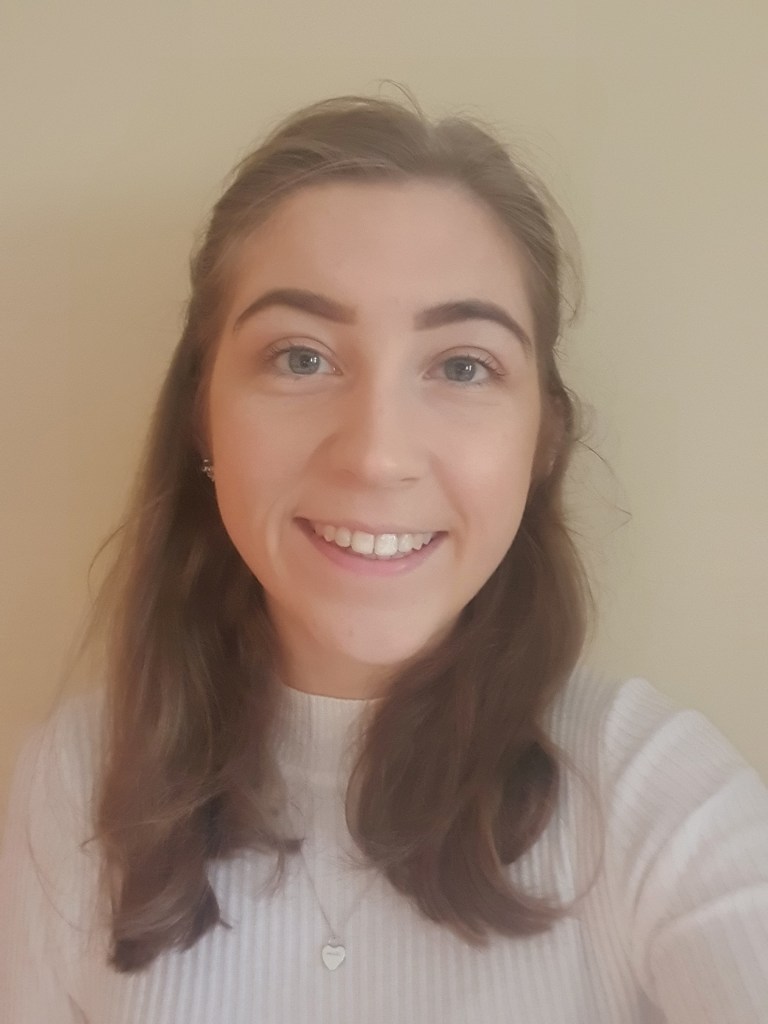
Keela Spillane is a dietitian. She has a MSc in Human Nutrition and Dietetics (2021-2023) from the University of Limerick and a BSc in Sport and Exercise Sciences (2017-2021) from the University of Limerick.
Contact: For any further questions please feel free to message me on twitter @KeelaSpillane or LinkedIn at keelaspillane
 PESS News & Information