

Type 2 diabetes, a condition characterized by elevated blood sugar levels, affects millions of people worldwide. While it requires careful management, recent research has shown that protein consumption can play a significant role in reducing and managing blood sugar concentrations in individuals with type 2 diabetes. In this blog post, we explore the science behind this phenomenon and discuss the benefits of incorporating protein into the diet for better blood sugar control.
The Role of Protein in Blood Sugar Regulation: When we consume carbohydrates, they break down into glucose, leading to an increase in blood sugar levels. Insulin, a hormone produced by the pancreas, is responsible for facilitating the uptake of glucose into cells, thereby reducing blood sugar concentrations. In type 2 diabetics, insulin resistance hinders this process, causing blood sugar levels to remain elevated.
Protein-rich foods, on the other hand, have a minimal impact on blood sugar levels. Unlike carbohydrates, proteins are not broken down into glucose in the body. Instead, they promote satiety, slow down digestion, and facilitate stable blood sugar levels. Additionally, protein consumption triggers the release of certain hormones, like glucagon and incretins, which further aid in blood sugar regulation.
1. Increased Satiety and Reduced Cravings: Including protein in meals can help people with type 2 diabetes feel fuller for longer periods, reducing the likelihood of overeating or indulging in unhealthy snacks. By curbing cravings and promoting better portion control, protein-rich diets can contribute to more stable blood sugar levels throughout the day.
2. Improved Glycaemic Control: Studies have demonstrated that high-protein meals result in a slower rise in blood sugar levels after eating. This is particularly beneficial for individuals with type 2 diabetes as it can prevent drastic spikes and dips in blood sugar, promoting better glycaemic control.
3. Preserving Lean Muscle Mass: Type 2 diabetes is often associated with muscle wasting and loss of lean body mass. Consuming an adequate amount of protein can help preserve muscle mass and support overall metabolic health, enhancing the body’s response to insulin.
4. Impact on Gluconeogenesis: Some concerns have been raised about protein’s potential to increase gluconeogenesis—the process by which the liver produces glucose from amino acids. However, current research indicates that moderate protein intake does not have a significant impact on blood sugar levels in most individuals, especially when part of a balanced diet.
Incorporating Protein into the Diet: For individuals with type 2 diabetes looking to harness the benefits of protein for better blood sugar control, here are some dietary tips:
1. Prioritize Lean Protein Sources: Opt for lean proteins such as chicken, turkey, fish, tofu, mycoprotein, and low-fat dairy. These sources are rich in essential amino acids and have fewer saturated fats.
2. Balance Protein Intake: While protein is beneficial, it’s essential to maintain a balanced diet with adequate carbohydrates and healthy fats. Consult a registered dietitian or healthcare provider to determine the right proportions for your individual needs.
3. Spread Protein Intake: Distribute protein intake across meals to support steady blood sugar levels throughout the day.
To summarise, protein’s impact on reducing and managing blood sugar concentrations makes it a valuable addition to the diet of individuals with type 2 diabetes. By incorporating protein-rich foods and adopting a balanced approach to nutrition, individuals can potentially experience improved glycaemic control, increased satiety, and a more stable blood sugar profile. As always, it’s crucial to consult with a healthcare professional to create a personalized dietary plan that aligns with specific health goals and needs.
Want to find out more?
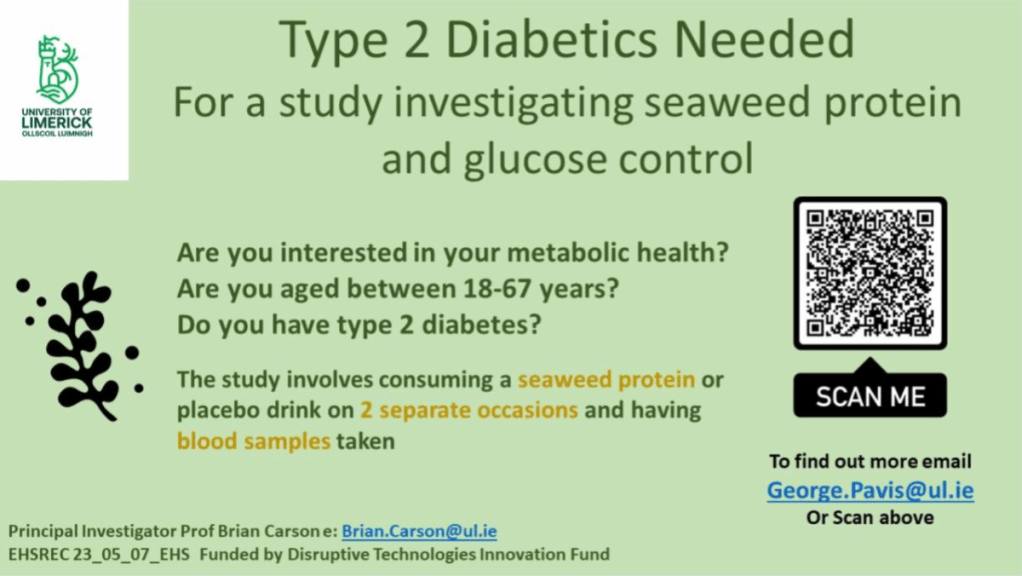
We are conducting a research study looking at how a new seaweed protein might affect blood sugar concentrations. If you have type 2 diabetes and are interested in taking part, please see the poster below and get in touch with Dr George Pavis at George.pavis@ul.ie.
Dr George Pavis
Postdoctoral Researcher, PESS, University of Limerick.
Contact: george.pavis@ul.ie.
Follow on twitter: @GPavis

 PESS News & Information