

High-repetition strength training (HRST) also known as circuit training has always been an interesting area for me as I have previously performed this type of training during the winter months when I was a competitive rower. At the time, HRST sessions such as 3 sets of 70 repetitions for the power clean, bench pull, deadlift, etc. were commonly prescribed with the aim of replicating the muscular endurance demands of the ≥210 stroke rowing race. These sessions generally resulted in a lot of fatigue both during and after a session! As a rower I always wondered if these sessions were beneficial as the fatigue generated often had recovery implications on the subsequent rowing and ergometer training sessions, which were more of a priority in my eyes from a training specificity standpoint. Low-repetition strength training (LRST) or heavy strength training made more sense to me at the time and is traditionally prescribed by coaches to improve a rower’s start, sprinting ability during a race or to improve a rower’s repeated submaximal force production.
However, the findings of a recent systematic review and meta-analysis by Nugent and colleagues (2023) indicates HRST may have some use for rowers and coaches such as early in the winter months (when rowing volume is still increasing), as an alternative to rowing aerobic training, as a resistance training programme for juniors or novices and as a potential method to improve technique at high intensities. I have found the potential for HRST to improve technique at high intensities to be an interesting finding as poor technique at high intensities is a recipe for poor boat speed and injury, as we all know. If you observe technique at the start of a 2 km erg test and at the end of a 2 km erg test then you will generally see major changes in technique, particularly in rowers with a low training age (e.g., slouching at the catch/finish, poor body angles, poor leg extension at the finish, etc.). Appropriately prescribed HRST may help to improve the repeated submaximal force production of specific muscle groups utilised during the rowing stroke and thus improve technique. Therefore, if we prescribe HRST appropriately – rowers could potentially sit up taller at the catch and finish, have better body angles on the recovery, etc.
Despite this, rowers and coaches should be cautious when incorporating HRST into their programme due to the high physiological (blood lactates >8.8 mM) and psychological demands which can lead to increased levels of fatigue during and after a session. Maintaining appropriate technique should always be the number one priority during resistance training and coaches need to ensure they supervise HRST sessions if they prescribe them. Coaches should also consider if a rower needs to improve repeated submaximal or maximal force production Power profiling on the rowing ergometer using 100 m, 500 m, 2km and 6km erg tests (Rice, 2014) and comparison against elite strength standards (Rawlley-Singh, 2021) will help to build a picture of the strengths and weaknesses of each rower in order to make individualised and evidence based decisions on the use of HRST and low-repetition strength training.
Nugent, F.J., Flanagan, E.P., Darragh, I., Daly, L. and Warrington, G.D. (2023) ‘The effects of high-repetition strength training on performance in competitive endurance athletes: a systematic review and meta-analysis’, The Journal of Strength and Conditioning Research, 37 (6), 1315-1326 available: https://doi.org/10.1519/JSC.0000000000004217
Rice, T. (2014). Protocol Modification: Power-Profile. Australian Institute of Sport/Rowing Australia. Retrieved 3 March 2017 from http://www.rowingaustralia.com.au/wp-content/uploads/2015/02/Power-Profile-Protocol-V3.1.pdf
Rawlley-Singh, I., Ferreira, M., and Chen, L. (2021). A strength and conditioning technical framework for Olympic rowing. Journal of Australian Strength and Conditioning, 29(5), 40-54.
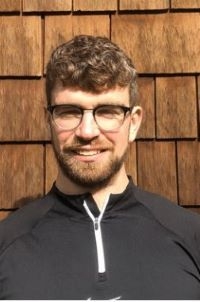
Dr. Frank Nugent is the Endurance Sports Science Theme Lead at the Sport and Human Performance Research Center and Course Director of the BSc in Exercise and Health Fitness Management in the Department of Physical Education and Sport Sciences, UL. He has a PhD in Exercise Physiology and is an accredited S&C coach through the Sport Ireland Institute and UK Strength and Conditioning Association.
Contact: frank.nugent@ul.ie Researchgate, LinkedIn @FrankNugent10
 PESS News & Information