
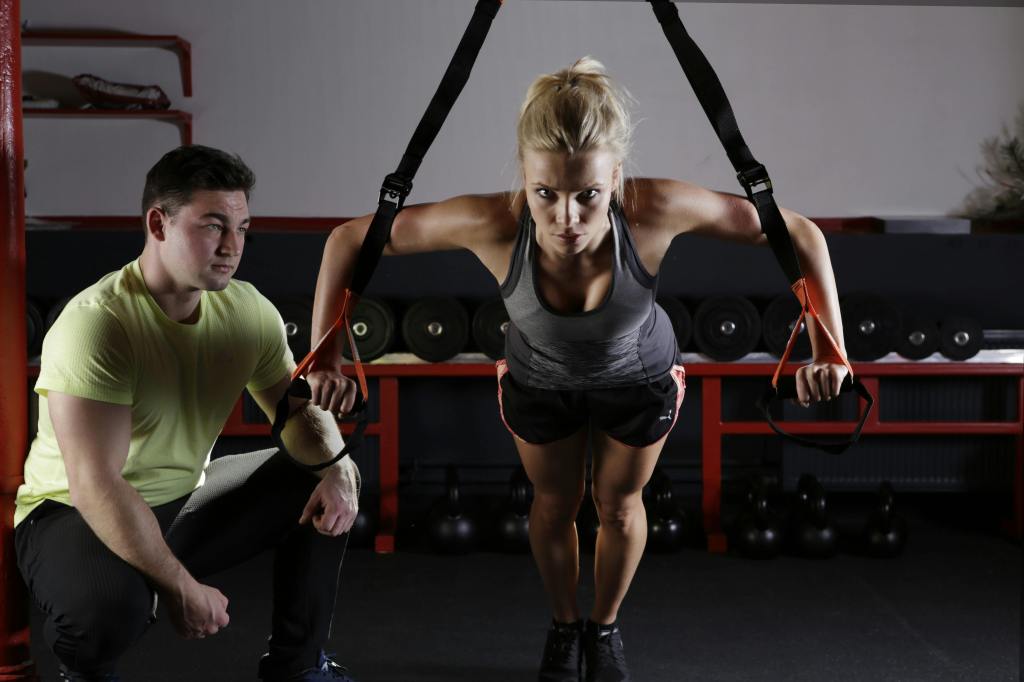
This January our first cohort of the BSc in Exercise and Health Fitness Management (LM105) students began the cooperative education (Coop) work placement programme.Coop is a 6-to-8-month placement that occurs in 3rd year of LM105 and is often seen as the highlight of many students’ experiences in UL. The work placement opportunities that are available to LM105 students are numerous both domestically and internationally thanks to the well-established network of work placement providers that have been built by PESS and the Coop division over the years. The aim of the Coop placement is to build a student’s self-confidence by working with others, put their academic knowledge into practice, improve their employability, broaden their knowledge base, learn about the work environment, and to help make decisions about their future career. But how can a programme prepare students for work placement? After all, a successful work placement can often lead to employment upon graduation. Therefore, university programmes need to ensure that they are mindful of what employers want and tailor their teaching and learning strategies to accommodate this. A study by Dinning (2017) explored employer’s perspective of the skills, attributes, and capabilities required of an exercise and sports graduate. The findings suggest employers primarily seek enterprise/entrepreneurship skills, together with a ‘sports graduate’ mind-set. This mind-set is described by the employers as being something which is demonstrated through a combination of behaviours and attributes such as passion, wanting to be the best, being resilient to change and seeing things through to the end. Dinning (2017) suggests the use of case studies and classroom-based challenges where students must respond to and solve problems is optimal. A survey by Baker et al., (2017) of 372 employers in the exercise and sports sector across six EU countries suggests that developing social and personal skills is vital for graduate employability. The social and personal skills that were highlighted by employers include energy and passion, self-confidence, teamwork and cooperation, supporting others, ability and willingness to learn. However analytical, and conceptual thinking and problem solving were also highlighted as important by employers. The programme content of LM105 aims to develop students who meet and exceed the expectations of employers in the exercise and sports sector. For example, students are qualified as fitness instructors after 1st year of the programme which will allow them to gain part-time work in the fitness industry in the early stages of their 4-year degree. This enables students to begin developing the skills, attributes and capabilities required of an exercise and sports graduate from an early stage in their studies. Teaching and learning strategies on LM105 comprise of a rich and diverse range of activities which include case studies, problem-based learning, practical tasks, role play, debates, presentations, group work and discussions. The programme content of LM105 aims is to ensure that students thrive when they enter employment in the exercise and sports sector as our Coop students and graduates are the strongest reflection of the quality of the programme. Dinning, T. (2017). Preparing sports graduates for employment: Satisfying employers expectations. Higher Education, Skills and Work-Based Learning, 7(4), 354-368. Baker, C., Loughren, E. A., Dickson, T., Goudas, M., Crone, D., Kudlacek, M., Petr, M., Petrova, L., Pichot, L., Frery, J.C. and Benoit, A. (2017). Sports graduate capabilities and competencies: a comparison of graduate and employer perceptions in six EU countries. European Journal for Sport and Society, 14(2), 95-116. |
Dr. Frank Nugent is the Course Director of the BSc in Exercise and Health Fitness Management (LM105) in the Department of Physical Education and Sport Sciences, UL and is the Endurance Sports Science Theme Lead at the Sport and Human Performance Research Center. He has a PhD in Exercise Physiology and is an accredited S&C coach through the Sport Ireland Institute and UK Strength and Conditioning Association.
 PESS News & Information