

The Paris 2024 Olympics saw the continued dominance of so-called ‘Super Spikes’ in sprint events, with nearly all top athletes opting for these advanced shoes. The variety of models seen in the games, highlighted the intense competition among brands to provide the ultimate sprinting shoe with each offering unique features.
The most frequently worn spikes in the sprint finals (men’s and women’s 100 m, 200 m, 400 m, 100 m Hurdles and 400 m Hurdles) were from Nike (34 athletes), which had a strong presence on the track. Adidas (28) and Puma (12) also had a noticeable presence, followed by a small representation from New Balance (4), Asics (1) and ON (1). As you will see in Figure 1, Adidas athletes won the most gold medals, however athletes who wore Nike stood on the podium more often. It’s worth noting that all four athletes who wore New Balance spikes claimed a spot on the podium, securing a total of four medals (two gold and two bronze) in their respective events.

The sprint finals show-cased a wide variety of Super Spike models on the sprint track, reflecting the diverse preferences and strategies of the world’s top sprinters. Nike led the charge with its popular, newly released Air Zoom Maxfly 2. The Adizero Prime SP3 and the Adizero Finesse, were the best represented Adidas spike. New Balance made its sprint mark with the FuelCell SuperComp MDX v3, a shoe that is marketed and considered a mid-distance spike (800 m to 3000 m). Puma had the most diverse variation of spike shoes from their Nitro Elite package. Athletes were seen in sprint and mid-distance versions of these spikes on track. The decision behind using these variants needs further research.
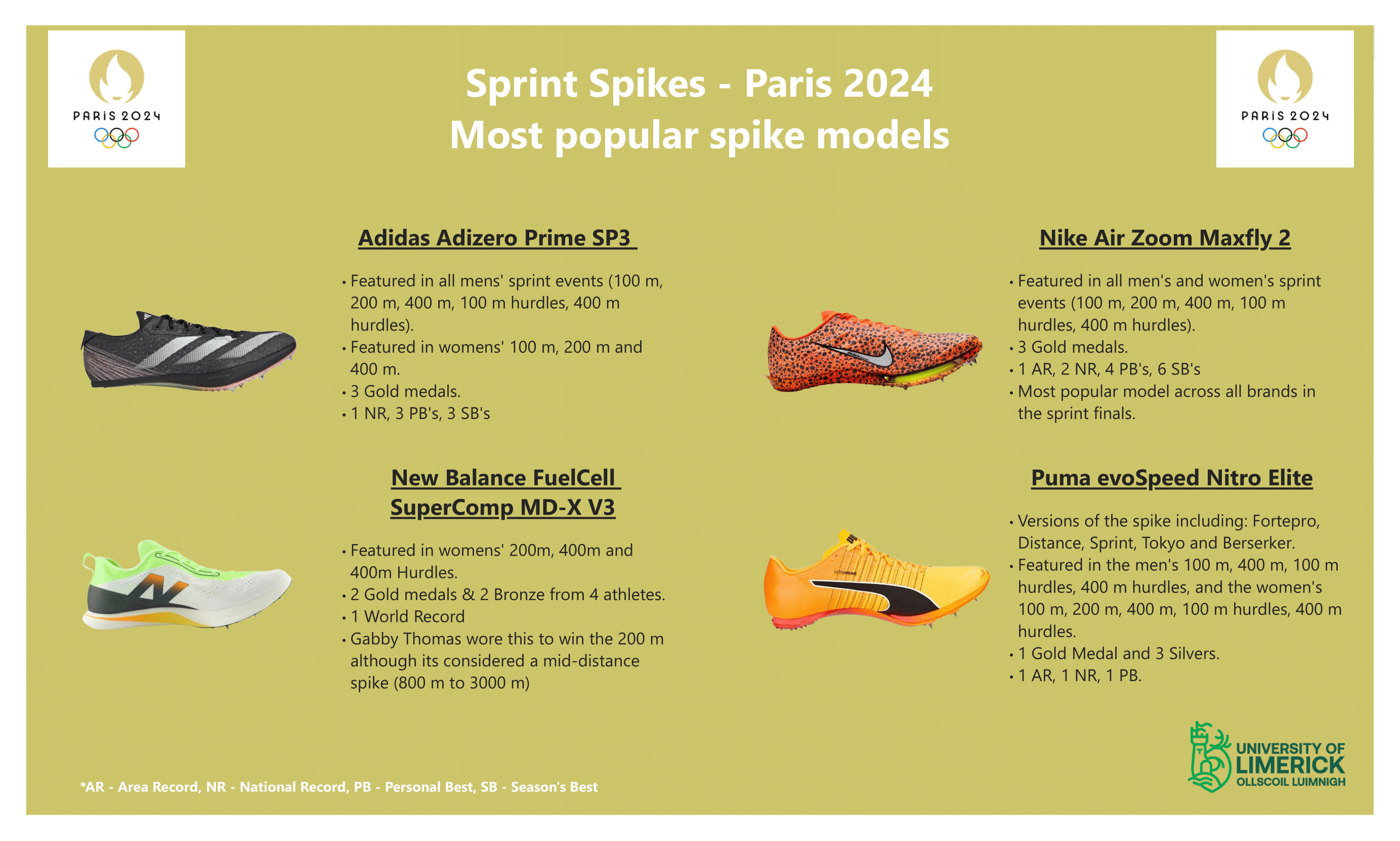
A key question surrounding the variety of Super Spikes used at the Olympics is whether athletes are choosing their footwear primarily due to sponsorship deals, or if they are making informed choices based on the shoes’ claimed technological advantages while considering injury prevention. With brands like Nike, Adidas, and Puma dominating the market, the allure of high-profile endorsements could easily overshadow the importance of choosing a spike that best suits an athlete’s specific needs and running style. As part of my PhD at the University of Limerick with Danu Sports and SFI Lero I will aim to answer some of these questions about attitudes and biomechanical performance indicators related to ‘Super Spike Shoes’.
Shane Hassett is a doctoral researcher in the Department of Physical Education and Sport Sciences at the University of Limerick. Shane’s research is in Sprint Spike Shoe Biomechanics in collaboration with DANU Sports. Shane holds a master’s degree in Sports Performance and a bachelor’s degree in Sport and Exercise Science, both from the University of Limerick.
Email: hassett.shane@ul.ie LinkedIn @s93hass

 PESS News & Information