

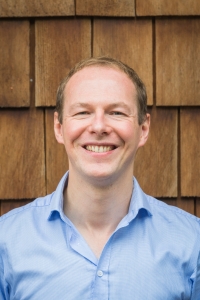
Tabitha (Tabby) Billingham made the move earlier in 2024 from USA undergraduate study to field hockey playing and coaching in Germany and Australia, to join the Irish Rugby Injury Surveillance (IRIS) project team when she was awarded a prestigious Irish Research Council IRC PhD scholarship. I caught up with Tabby to ask her a bit more about her previous roles and what she has planned for her PhD…
|
Where did you move from and where is home originally? I grew up in Suffolk in England but moved to Williamsburg, Virigina in the US for my undergraduate degree at the College of William & Mary in 2019. In 2021 my parents moved to Broadford in Clare so that became my new home. Then in 2023 I graduated, left the US and lived in Hamburg and London for a few months each before moving to Melbourne at the start of this year. So, about 2 weeks before starting at UL in September I moved from Melbourne to Limerick. Where and what did you study at university? I got a scholarship to play NCAA Division 1 field hockey at the College of William & Mary in Williamsburg, VA, USA and I double majored in Kinesiology & Health Sciences and Business Analytics Data Science with a concentration in Management & Organisational Leadership. You undertook an intern research position a few years ago at UL, how did that come about? At the end of my third year at university I had completed a few business courses that required a lot of data analysis and reporting, I really enjoyed that type of work and one of my lecturers suggested I look into a future in research. However, to be honest, I wasn’t all too interested in the topics we were completing analysis on within the business school, and I was becoming more and more interested in the sport science side of my degree. So, I decided to contact Prof Kenny and Prof Warrington in PESS to see if I would be able to intern in the department over the summer to gain more experience and understanding of the sport science research world. What was it like presenting your intern undergraduate work at a big international conference in 2022? ACSM was so huge, and I had never been to an academic conference before so I would say it was overwhelming, but exciting. The opportunity to be there, let alone present my poster, was so cool, and it only confirmed to me that I wanted to pursue a career in academia and sport science. Why the change in direction now to study for a PhD? I’m not sure I would even consider it a change in direction, I have always loved learning, and I knew from very early on in my undergraduate degree that I would want to continue my education beyond those 4 years. After doing the internship at PESS in 2022 and presenting at ACSM the following year though, I knew that a PhD was the way to go, and then after being told I could essentially design my own through the IRC application, it was a no-brainer because I already knew what I wanted to focus on. What attracted you to Ireland, and UL, and the IRIS research group? Completing the internship at UL, along with being given the opportunity to work in the IRIS group and write up, publish and present some of the research was amazing. So, at that point, since I knew I wanted to do a PhD, and loved my experience at UL and working with the IRIS research group, I never considered anywhere else. Tell me a bit about your PhD topic. My PhD is on injury and illness epidemiology around the prevalence of Relative Energy Deficiency in Sport (REDs) in Ireland. Initially I will focus more broadly on REDs in team ball sports in Ireland, before looking specifically at Rugby as there has been very little research completed on the impact and prevalence of REDs in this area. What do you think are some of the key player welfare areas of the rugby game that we should be addressing as researchers? Besides the current work being completed by the IRIS research group, I think the psychological side of player welfare is so important to look at. During my time as an NCAA D1 athlete the conversation around athlete mental health became more and more prominent with the academic and athletic performance demands put on student-athletes in that environment. The interplay between performance and mental health within sport is vital for success as an individual athlete and the team as a whole, so this would certainly be interesting for researchers to address within rugby. |
Tabitha Billingham is a PhD student in the Department of Physical Education and Sport Sciences, University of Limerick.
Contact: billinghamn.tabitha@ul.ie Follow on X @tabbybillingham ORCID LinkedIn
Prof Ian Kenny is a Professor in Biomechanics in the Department of Physical Education and Sport Sciences at the University of Limerick. Prof Kenny is co-Principal Investigator for IRIS and co-director of the Sport and Human Performance Research Centre. Ian’s research interests include the biomechanics of sports injury and sports medicine, sport and human performance, and musculoskeletal modelling and computer simulation of movement.
Contact: Ian.Kenny@ul.ie ResearchGate Follow on X @IanCKenny
 PESS News & Information