
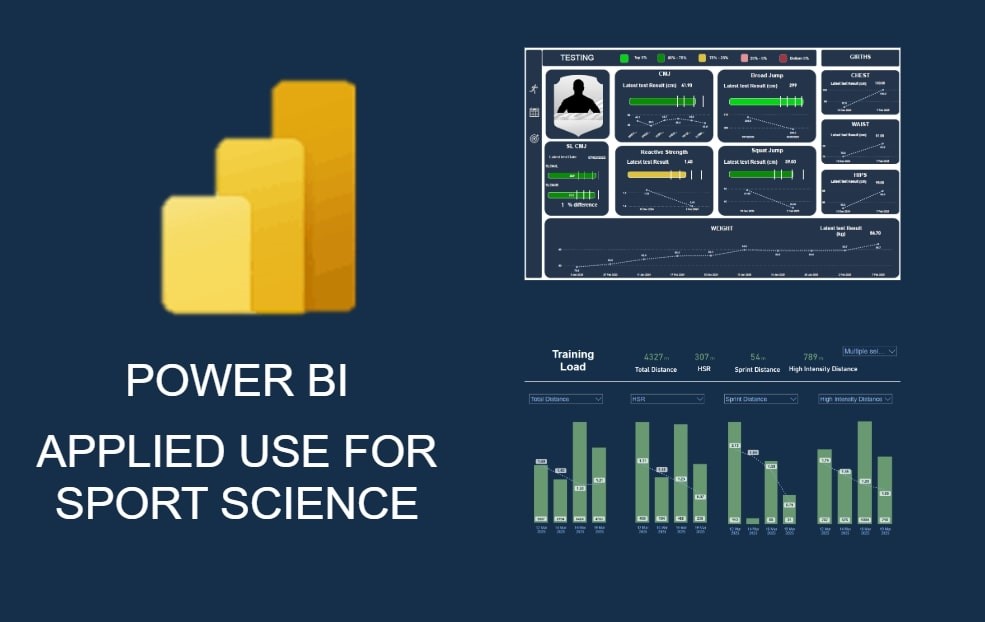
Microsoft Power BI is a widely used business intelligence tool for data analysis and visualisation. It provides interactive dashboards, real-time insights, and predictive analytics. While originally designed for corporate use, it is now popular in sport science for making data-driven decisions.
Sport scientists collect data from various sources such as GPS trackers, heart rate monitors, force plates, and other performance testing tools. Traditionally, these data would be analysed using spreadsheets or specialised software, often leading to slow reporting processes. Power BI streamlines this process by integrating data sources into one dynamic dashboard, which can provide individual reports within seconds to guide training programmes.

One key application is training load monitoring. Power BI visualises an athlete’s workload over time, identifies patterns between workload and fatigue, and helps prevent overtraining by flagging at-risk athletes. Beyond individual athletes, Power BI supports team-wide insights. Custom dashboards can compare fitness levels and test results, helping coaches assess individual and team strengths. By compiling and comparing data from multiple athletes, teams can assess potential recruits based on measurable performance metrics rather than subjective opinions. Long-term trends in player development become easier to track, helping clubs make informed decisions on scouting and squad building.

Power BI improves communication by allowing data to be shared with players and coaching staff in a clear and engaging format. Instead of relying on lengthy reports, coaches can present insights through interactive dashboards highlighting key takeaways. Players can access personalised data to track progress, set goals, and better understand their strengths and areas for improvement.
While Power BI requires initial setup and data literacy, it simplifies complex datasets and enhances decision-making. Its ability to handle large volumes of data makes it especially valuable for sports scientists working with extensive tracking systems. In my own PhD, I will use Power BI to analyse large-scale kinematic and kinetic sprinting data, making it easier to identify performance trends and biomechanical patterns. By providing clear and actionable insights, Power BI helps sport science practitioners and academics improve productivity and enhance data-driven decision making.
Shane Hassett is a doctoral researcher in the Department of Physical Education and Sport Sciences at the University of Limerick. Shane’s research is in Sprint Spike Shoe Biomechanics in collaboration with DANU Sports. Shane holds a master’s degree in Sports Performance and a bachelor’s degree in Sport and Exercise Science, both from the University of Limerick.
Contact: Email: hassett.shane@ul.ie X: @s93hass LinkedIn

 PESS News & Information