

Eight representatives of the Physical Education & Sport Sciences Department travelled to Athens for the 15th ICCE Global Coach Conference. Recent MSc Applied Sports Coaching graduates as well as current staff, PhD and Professional Doctorate students presented on their on-going research, evidence of the outstanding growth in sports coaching research at the University of Limerick.
Much of the focus was on research projects and the dissemination of research within coach education, with discussions of future collaborations with partners from Sydney to Lapland to Colorado. However, there was a teaching focus too; aligning with the UL Strategy on Internationalisation, meetings took place with colleagues from Universidad Europea, Madrid and Leeds Beckett University with a view to developing potential joint undergraduate and postgraduate programmes.

In this blog, a range of attendees comment on their highlights from the conference:
Dr Ian Sherwin (Sports Coaching Science Research Theme lead): The standout session for me was the very first one on the first morning – AI, Technology and Coaching (Scotland) – which included work using 360° video for coaches in football and will transfer to most other coaching contexts. It will also be beneficial to bring into our new technology modules in SES year 2. Reflection for coaches, assessment of learning for coach educators and athlete performance measurements are just some of the benefits of this technology. Using AI to interpret coaching behaviours through the analysis of coaching transcripts was demonstrated by colleagues from Singapore but this was taken to an altogether different level by a demonstration (Uni of Louisville, USA) of how to build your own.
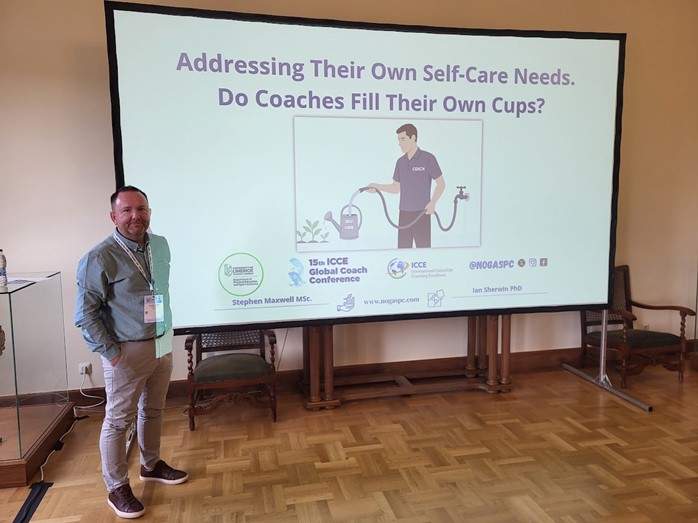
Stephen Maxwell (Cricket Ireland and MSc Applied Sports Coaching graduate): Biggest takeaways for me on reflection as I fly home: Using AI to support Coaches & Coach Development from Andreas Stamatis, Ph.D., FACSM, ACSM-EP (creating a ChatBot); Unreasonable Coaching from Ashley Ross “One Size Fits One”; Kris Van Der Haegen on the Belgium Masterplan – 1 Vision for Development, “Creating Tailor Made Coaching”; Hally Chapman using Stories to share learning through her coaching journey, and leaving us with the nugget: “Confidence Before Competence”. Ryuji Nakatake showcasing how the Japanese Olympic Committee are future proofing sport by “Developing High Performance Directors”, those Leading 8 Elements will support so many going forward. Over the four days, it was wonderful to connect with so many people involved in sports whether it was coaching, coach developers, researchers, academics or governing body staff, the passion and energy in the room and sessions each day was amazing.

Denise Murphy (Triathlon Ireland and MSc Applied Sports Coaching graduate): As a curious coach and coach developer committed to supporting others through the latest research, I found the conference truly energising. Being surrounded by passionate coaches, practitioners, and academics from around the world, sharing innovative research, frameworks, personal stories and ideas aimed at elevating coaching standards, was nothing short of truly inspiring. The collective drive to improve coaching and support coaches for the betterment of athletes, and sport was remarkable. I’m incredibly grateful for the opportunity to present my research on such a global platform and for the support, feedback, and encouragement I received.
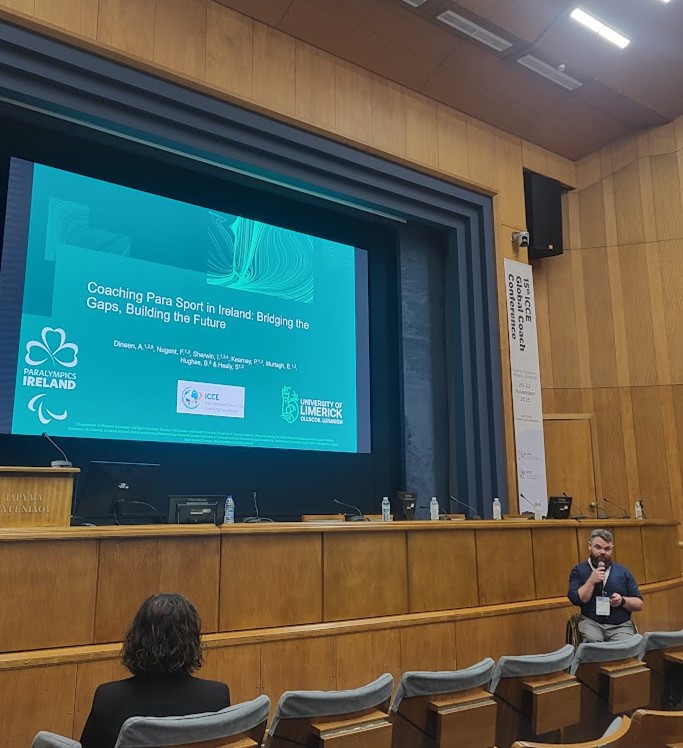
Alan Dineen (PhD candidate). I had a brilliant first experience at the International Council for Coaching Excellence Global Coaches Conference. Really grateful for the connections made and the chance to learn from so many coaches and researchers working to push our field forward. Great to reconnect with Stephen Maxwell after so many years. His session on coach self-care hit home. A timely reminder that filling your own cup is a must do for us coaches! I was also grateful for the opportunity to present our work on Para Sport coaches in Ireland in collaboration with Paralympics Ireland, highlighting their experiences of isolation, fear and anxiety, and the sheer complexity involved in coaching in this space. These conversations matter, and it was encouraging to see such genuine interest in improving support structures for Para Sport coaches globally. Already looking forward to the next one.

David Royle (MSc Applied Sports Coaching graduate and PhD candidate at TU Dublin). At the ICCE Conference in Athens there were numerous excellent presentations, each offering new perspectives and ideas that genuinely challenged my thinking. I had the opportunity to meet researchers and coach developers whose work aligns closely with my own interests in reflective practice, feedback, coach learning, and the use of technology to support reflective development. The conversations were genuinely thought-provoking and added real depth to my understanding of how coaches learn and develop. It was a privilege to share the outline of my PhD study and discuss my research ideas with so many people who are equally passionate about developing meaningful learning environments for coaches and athletes. I felt proud to represent TU Dublin and contribute to the wider conversation on reflective practice in coach education. I am looking forward to building on this experience as the research continues.
Dr Phil Kearney (MSc Applied Sports Coaching Course Director). I was very proud to see such a strong representation of the sports coaching research from the University of Limerick at this international conference. All of the MSc, PhD and Professional Doctoral students and graduates who presented were a credit to the institution and to Irish research. The University of Limerick is a vibrant centre of coach development and coaching research and I look forward to its continued growth and influence in the years to come.
Sports Coaching Science is an emerging research area within the Sport & Human Performance Research Centre at the University of Limerick. Recent publications from the Sports Coaching Science group include:
Barrett et al. (2025) Developing skill within the context of a game-based approach
Dineen et al. (2025) Athlete & Coach Experiences of Para Sport Gateways & Pathways in Ireland
Kinnerk et al. (2025) Gaelic football coaches’ use of a game-based approach impacts game performance, session characteristics, and player perceptions
Nugent et al. (2025) What do elite rowing coxswains say during races?
O’Mahony et al. (2025) An exploration of high-performance team sport coaches’ pedagogical practice across a season: A mixed-methods case study approach
Sherwin et al. (2025) Toward language-based pedagogies for in-game communications in youth level sport
UL’s MSc in Applied Sports Coaching is an innovative two-year, part-time programme designed for coaches who want to elevate their expertise and apply cutting-edge coaching methodologies. Find out more here.
Dr. Phil Kearney is the Course Leader for the MSc Applied Sports Coaching at the University of Limerick. A Fellow of the Higher Education Authority, his teaching and research centres on the domain of skill acquisition, particularly as it relates to youth sport. A regular contributor to RTÉ Brainstorm, Phil is a member of the Gaelic Athletic Association’s Player & Coach Development Advisory Group, an Associate Editor for Perceptual and Motor Skills and is on the Editorial Board of the Journal of Motor Learning and Development. Phil is a co-founder of Movement and Skill Acquisition Ireland.

Dr. Ian Sherwin is the Course Director Bachelor of Science in Sport and Exercise Sciences at the University of Limerick and a Research Fellow at the Centre for Sport Leadership, Stellenbosch University, South Africa. A Sport Ireland Coach Tutor and Coach Education Programme Reviewer, Ian is a Member of International Council for Coaching Excellence. Ian’s current research projects focus on communication strategies in team sports in training and competitive situations from both coach and athlete perspectives, as well as elite referees’ communications in rugby union based on behaviour observation during matches.

 PESS News & Information