
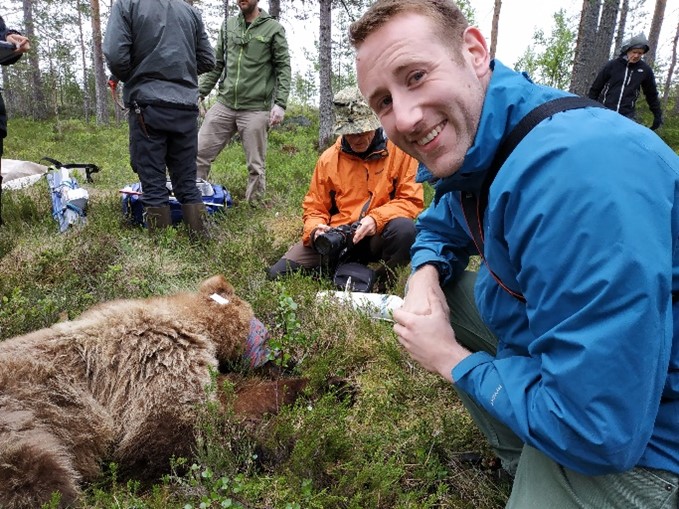
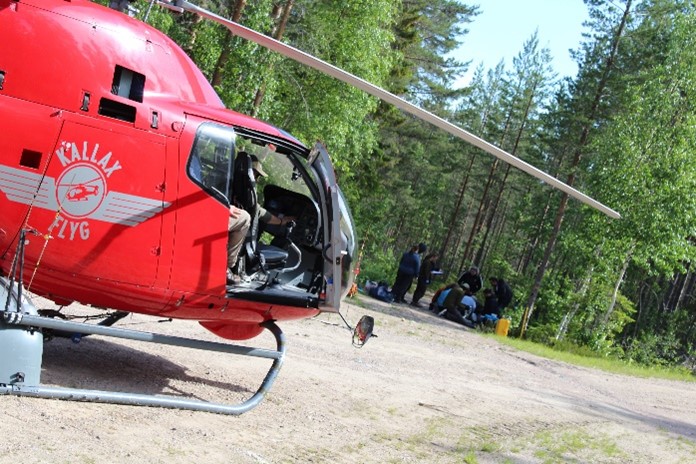
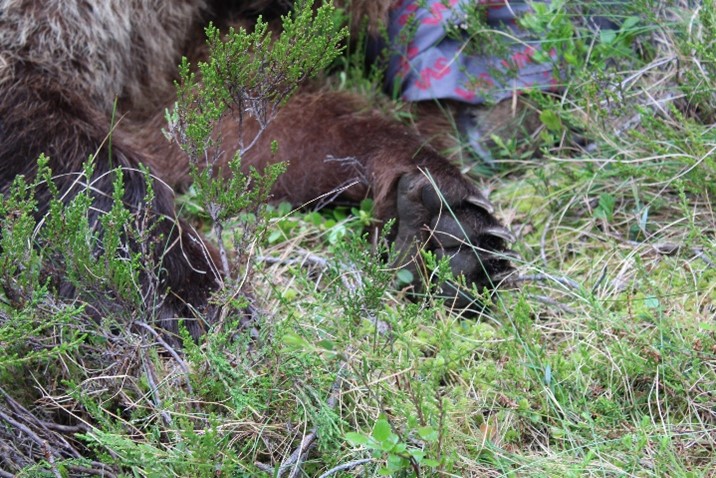
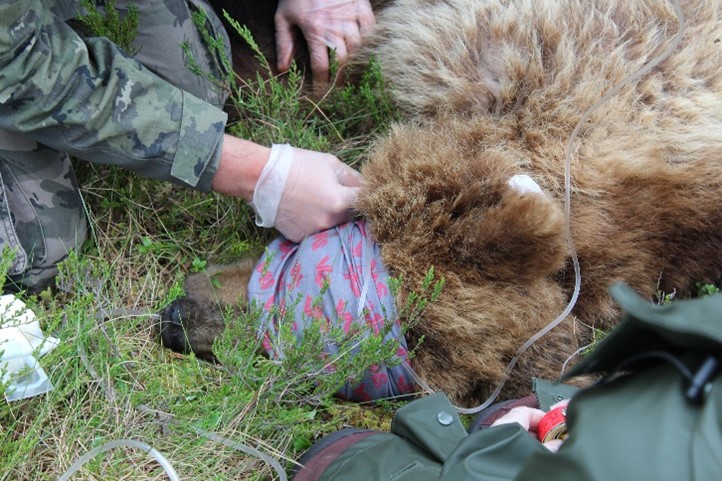
Each winter, Scandinavian brown bears retreat into hidden dens and enter one of nature’s most extraordinary physiological states: hibernation. For up to six months, they do not eat, drink, or exercise. Their heart rate slows, body temperature drops, and metabolism shifts into low gear.For humans, even a few weeks of inactivity can lead to muscle loss, weakness, and metabolic dysfunction. Yet bears emerge in spring strong, mobile, and ready to survive. How do they preserve their muscles during such extreme inactivity? Our recent study in Acta Physiologica, “The preservation of muscle mitochondrial machinery during hypometabolic hibernation in Scandinavian Brown Bears,” set out to answer this question by focusing on a key driver of muscle health: mitochondria. A link to this paper can be found here: https://onlinelibrary.wiley.com/doi/10.1111/apha.70177 The Conversation have also written a piece on our work which can be found here: Hibernating bears reveal clues to fighting muscle loss – new study Why Mitochondria Matter? Mitochondria are the cell’s energy factories, producing the molecules muscles need to contract and function. In skeletal muscle, they generate the energy needed for movement and metabolism. When mitochondrial function declines—as happens with aging, illness, or prolonged bed rest—muscle performance suffers. In humans, inactivity leads to: · Reduced mitochondrial content · Lower energy production · Impaired metabolic flexibility · Muscle atrophy Given that hibernating bears remain inactive for months, we expected to see similar deterioration. Instead, we found something very different. Science in the Scandinavian Wilderness What makes this study especially remarkable is not only what we discovered, but how we did it. This research took place in the remote Scandinavian wilderness, not in controlled laboratory settings. Working alongside veterinarians, wildlife experts, and field scientists, we tracked wild bears to their winter dens. Locating a hibernating bear beneath deep snow in dense forest is no small feat, and safety—for both researchers and animals—was always paramount. Once located, bears were carefully monitored while small muscle biopsies were collected. In summer, the challenge shifted. Active bears roam vast territories and are difficult to approach. With the help of experienced helicopter pilots, bears were located and temporarily tranquilized so that biopsies could be taken safely. Racing Against Time The work did not end in the field. All mitochondrial measurements were performed on fresh muscle tissue using high-resolution respirometry—a technique that measures energy production in real time and is extremely time-sensitive. From the moment a biopsy was taken, the clock was ticking. Samples had to be rapidly preserved, transported, and processed. Any delay could compromise mitochondrial energetics. This tight coordination between field and laboratory teams was essential for capturing an accurate picture of mitochondrial function during hibernation. Fewer Mitochondria, Not Broken Ones Our first major finding was that mitochondrial respiratory capacity was lower in winter. At first glance, this seemed like bad news. But the reason was revealing. Hibernating bears had fewer mitochondria, but unlike what we see in prolonged bed rest studies in humans, these remaining mitochondria were undamaged. Interestingly, the remaining mitochondria functioned normally. Instead of allowing their mitochondria to deteriorate, bears temporarily reduced their number—a sensible energy-saving strategy during prolonged fasting. Rather than losing quality, they scaled down quantity. A Strategic Shift in Energy Pathways We also observed important changes in the mitochondrial electron transport chain, particularly in Complex II, which helps generate ATP. During hibernation: · Expression of SDH subunits decreased · But enzyme activity remained stable This suggests that bears fine-tune protein function through post-translational regulation rather than simply producing more proteins. Functionally, this allows mitochondria to shift toward Complex II–mediated electron entry—an alternative pathway that may be better suited to low-temperature, low-metabolism conditions – Instead of shutting down energy production, bears reroute it. Staying Metabolically Flexible Proteomic analysis revealed that hibernating bears maintain the ability to use both fat and carbohydrates efficiently. This flexibility is crucial during long fasting periods. Their mitochondria were optimized to: · Support fat oxidation · Preserve carbohydrate metabolism · Minimize energy loss · Maintain ATP production Rather than entering a rigid “hibernation mode,” bear muscle remains adaptable and efficient. Protecting Muscle Structure We also found that several proteins involved in mitochondrial dynamics—such as fission and fusion—were downregulated during hibernation. This likely helps: · Reduce unnecessary energy expenditure · Limit mitochondrial turnover · Protect muscle integrity By stabilizing their mitochondrial network, bears avoid the muscle breakdown that typically accompanies inactivity in humans. A Coordinated Survival Strategy Taken together, our findings reveal a finely tuned response to hibernation: · Reduced mitochondrial density · Preserved functional efficiency · Shifted electron transport pathways · Maintained fuel flexibility · Stabilized mitochondrial structure All of these adjustments appear to be sensitive to temperature and metabolic state. Bears effectively place their muscles into a low-power, high-efficiency mode—without sacrificing long-term performance. What Bears Can Teach Us These findings extend far beyond wildlife biology. Humans face similar challenges during: · Aging · Long-term bed rest · Spaceflight · Injury recovery · Chronic illness In these situations, muscle loss and deterioration in mitochondrial energetics are major problems. Bears demonstrate that prolonged inactivity does not have to mean irreversible decline. By understanding how they preserve how the mitochondria function, we may uncover new ways to protect human muscle health. Conclusion: Pawprint of Survival Throughout the winter, hidden beneath snow, brown bears carry out one of nature’s most effective strategies for long-term survival—their own pawprint of survival. Their muscles adapt by reducing what is unnecessary, preserving what is essential, and maintaining energy production despite months of inactivity. Mitochondrial density is lowered, pathways are adjusted, and efficiency becomes central to sustaining function. From remote forests to the laboratory bench, this work shows how much can be learned by studying animals in their natural environment under real physiological extremes. In hibernation, bears demonstrate that resilience is not about maintaining everything, but about protecting the systems that matter most. Their “pawprint” leaves a clear lesson for humans: by understanding and preserving the mechanisms that support muscle and mitochondrial function, we may find better ways to prevent muscle loss, maintain energy efficiency, and promote long-term health during periods of inactivity or aging. |
|
Dr John Noone, PhD is an Assistant Professor in Sport & Exercise Physiology, and the Course Director of Sport & Exercise Sciences in the Department of Physical Education & Sport Sciences, UL. Email: john.noone@ul.ie UL Pure: John Noone – University of Limerick X: @JohnNoone4 ResearchGate: https://www.researchgate.net/profile/John-Noone?ev=hdr_xprf ORCID: https://orcid.org/0000-0002-5733-4816 LinkedIn: https://www.linkedin.com/feed/ |

 PESS News & Information