
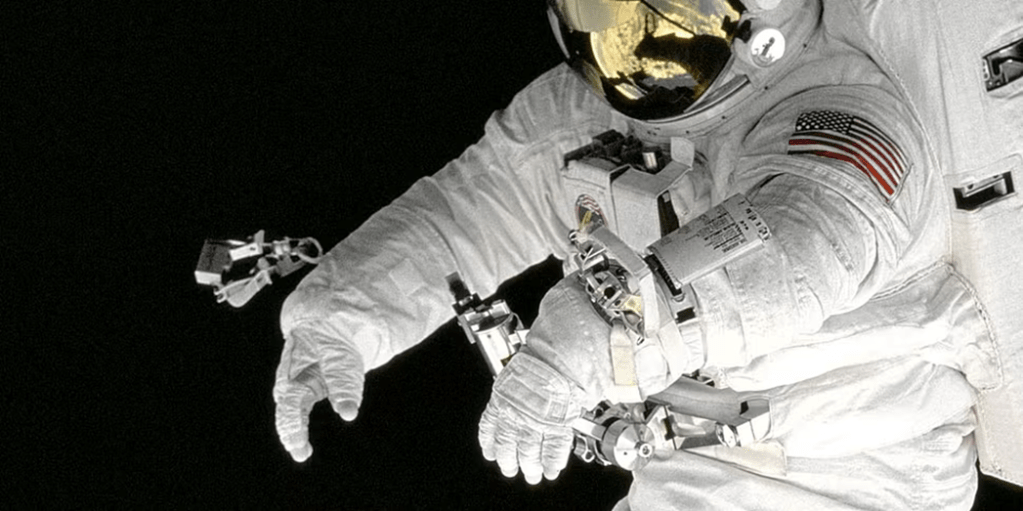
With Artemis II now on its return trajectory to Earth following its lunar flyby mission, recent discussion on The Claire Byrne Show explored the impact of space travel on the human body, as well as potential countermeasures to mitigate these changes. As space missions become longer and more ambitious, particularly with planned journeys to Mars and beyond, understanding and addressing these physiological effects will become increasingly important—not only for astronauts, but also for applications in sport and exercise science here on Earth.The podcast highlighted how microgravity environments lead to significant physiological changes, including significant fluid shift, muscle atrophy, bone density loss, and cardiovascular deconditioning. Exposure to microgravity reduces gravitational loading and alters fluid distribution, diminishing mechanical stimuli to muscle and bone (particularly those areas integral for posture control), contributing to rapid declines in musculoskeletal strength. . These effects mirror, and in some cases accelerate, the challenges seen in sedentary populations, aging or during injury-related immobilisation.
From a sport science perspective, this provides a unique model to study adaptation, deconditioning, and recovery. Countermeasures used in space such as resistance training, treadmill running with pressurised harness systems, structured exercise and nutritional protocols -closely resemble rehabilitation and performance programmes used in clinical populations and elite sport. This crossover highlights the importance of targeted, evidence-based interventions and countermeasures to maintain physical function in extreme or constrained environments; areas Dr. Noone has studied in detail alongside the European Space Agency (https://physoc.onlinelibrary.wiley.com/doi/10.1113/JP284734) and the Scandinavian Brown Bear Project (https://onlinelibrary.wiley.com/doi/10.1111/apha.70177).
As the boundaries of human exploration expand, so too does our understanding of human limits and adaptability. Research from space travel continues to inform best practice in physical activity, rehabilitation, and performance optimisation. For clinicians, practitioners and students within Physical Education and Sport Sciences, these insights reinforce the importance of interdisciplinary approaches to health and performance.
You can listen to the full discussion here: https://www.newstalk.com/podcasts/clairebyrne/the-impact-of-space-travel-have-on-our-bodies
Dr John Noone, PhD is an Assistant Professor in Sport & Exercise Physiology, and the Course Director of Sport & Exercise Sciences in the Department of Physical Education & Sport Sciences, UL.
Contact: Email John.noone@ul.ie UL Pure Follow on X: @JohnNoone4 ResearchGate ORCID LinkedIn
 PESS News & Information