
Have a look at the following map taken from the European FitBack project. The map compares the standing broad jump performance, a measure of muscular strength and power, of children and adolescents across different European countries.
How does Ireland compare?
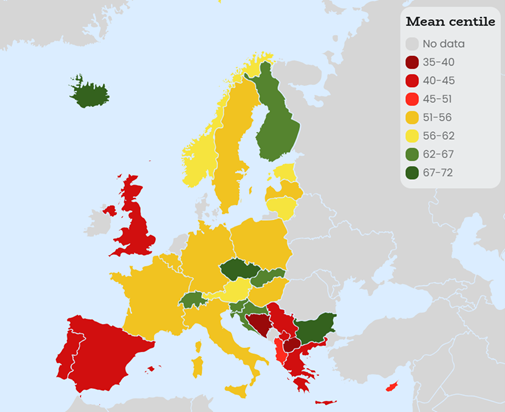
We do not. The data does not exist!
Ireland is blank, and this is also the case across other fitness maps developed by FitBack. The absence of data highlights a significant gap. Physical fitness in adolescence is one of the strongest indicators of current and future health, yet Ireland does not have nationally representative data to understand how fit Irish adolescents are.
To address this, I am currently undertaking a study as part of my PhD that aims to establish Ireland’s first nationally representative physical fitness dataset for adolescents aged 13 to 18.
The Study
I am working with a stratified sample of 25 post-primary schools across the country. Schools have been randomly selected to reflect national distributions across region, school type, and DEIS status. Within each school, students from across all year groups take part, allowing us to build a picture that is representative at a national level.
The Tests
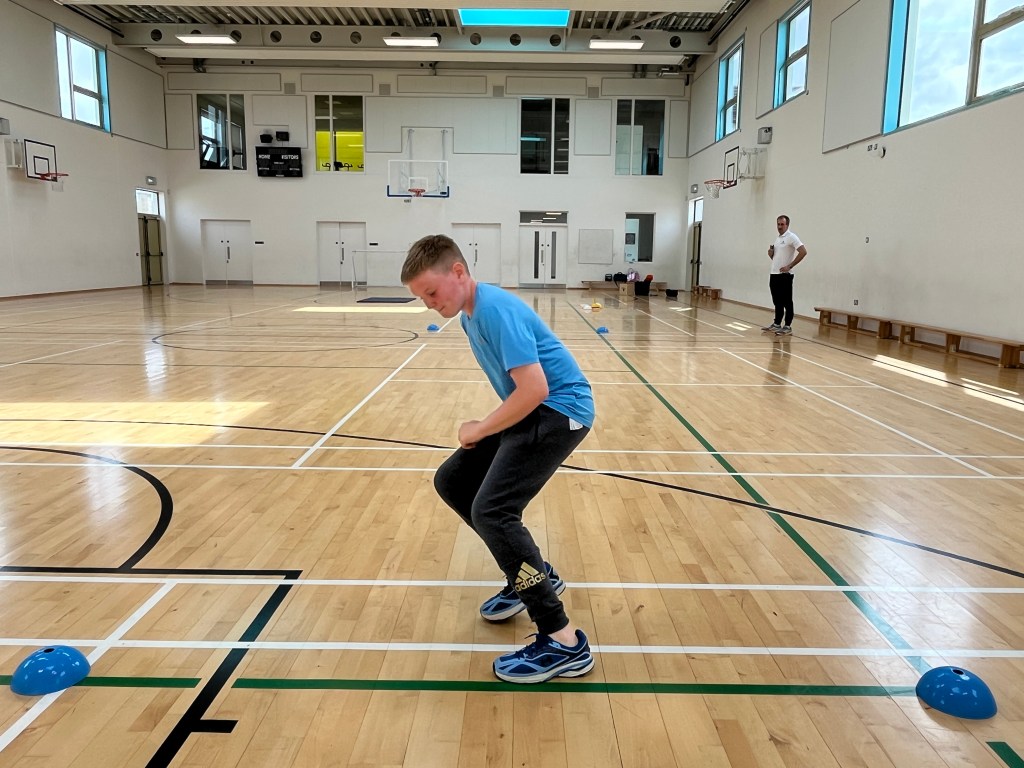
A standardised fitness test battery that includes eight measures of physical fitness was developed for this research. The tests include the 20m shuttle run, standing long jump, handgrip strength, body mass index, sit and reach, plank hold, 4 x 10 metre shuttle run, and ball wall toss test.
Training
Before data collection begins, PE departments take part in training on how to administer the test battery developed for this study. This focuses on understanding the testing protocols, setting up each station correctly, and ensuring consistency across all measures.
Transition Year students are also trained as part of this process and play a key role as test administrators. They help set up stations, guide students through each test, and record results.
Schools are provided with all the equipment required to carry out the testing. Once trained, PE departments implement the test battery during PE classes over two consecutive weeks, following the structured format.
Data Recording and Storage
Training also includes how to accurately record and manage the fitness test data using the Athena FitnessMark software platform that is provided to each school in the study. This platform is used by schools to input and upload all fitness data as testing takes place. FitnessMark allows teachers to generate meaningful reports for students on their personal fitness levels, while also providing a consistent system for storing and managing data across all participating schools. This ensures that the data collected can be used both at the school level and as part of the national dataset we are establishing.
Study Updates
Data collection is now underway, and for me that means plenty of time on the road. I am travelling across the country visiting schools, working with PE departments, and supporting the testing process as it happens.
So far, the experience has been extremely positive. PE departments have been very supportive, and the feedback from students, TY administrators, and teachers has been excellent. There is a real sense that schools value being part of something that has national importance. Data collection will continue until May. After that, the focus shifts to analysing the data and establishing normative datasets for adolescent boys and girls, aged 13 to 18, across all eight fitness measures.
For the first time, Ireland will no longer be a blank space on that map. It is long overdue.
I would like to thank my supervisor Dr. Brendan O’Keeffe for all his support and guidance related to this research.
Eoin Joy is a PhD candidate in the Physical Education & Sport Sciences Department, UL.
Contact: Email joy.eoin@ul.ie LinkedIn
 PESS News & Information