
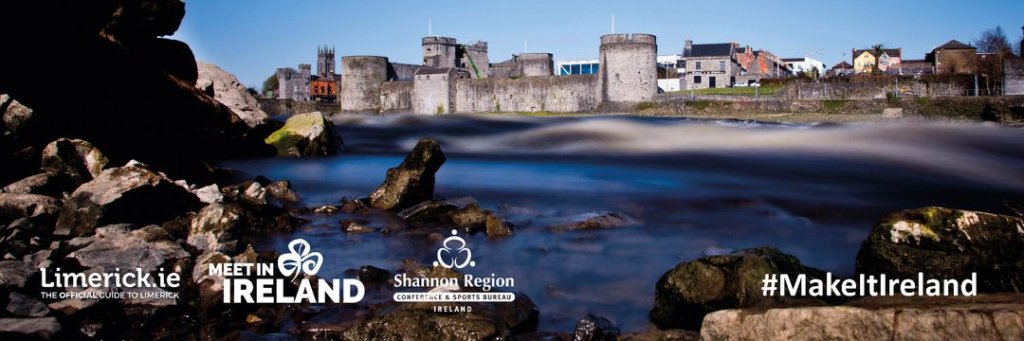
If I haven’t already told you, we are very proud to be hosting the International Biochemistry of Exercise Conference 2024 here at the University of Limerick.
We hope to welcome you this coming July 9th-11th (Register here). I thought it might be interesting to read about some of what goes on in the background to putting on an international meeting of this scope and magnitude. Here in Part 1, I will outline some of the key phases and responsibilities in preparation the bid for an international conference. Later in the series, I will delve into preparing, running the conference itself and the associated aftermath.
Phase 1: Pre-planning
The idea that we could host IBEC 2024 began to take hold at the 2015 meeting in Sao Paulo, Brazil. Prof Phil Jakeman began some initial enquiries with key players in the International Research Group for Biochemistry of Exercise (IRGBE) Prof Jacques Poortmans, Prof Marc Francaux and Prof Mark Hargeaves. Early soundings were positive and saw no resistance at least to an Irish bid for 2024. At that time meetings were held every three years, and 2024 was viewed as the next likely time the meting would rotate back to Europe. With that in mind we did some initial preparations prior to Beijing in 2018 where I travelled to ‘press the flesh’ and reiterate our interest in potentially hosting the meeting. I tried to ascertain what they key factors in putting together a successful bid might be. Mark Hargreaves was particularly helpful as a sounding board to both myself and Phil. As such, the seeds were sewn on both sides for a potential Irish bid at the next meeting which was announced as Toronto.
Phase 2: Preparing your bid
This phase involves identifying proposed dates and venue for your meeting. Key considerations for us were that we wanted to put the University of Limerick on the map in this area and to show off our beautiful campus. We have the facilities to comfortably host a meeting of this size (approximately 350 delegates), so UL campus was always going to be our venue. Clearly the dates are an important consideration and here we factored in other international meetings which we did not want to conflict with but also that we could potentially mutually benefit from in terms of our long distance travellers. For example, the Physiological Society meeting (UK) and the European College of Sports Sciences (Glasgow) are the week before IBEC2024. This means long haul travellers could potentially take in two meetings on their European trip. Accommodation also needed to be considered. We wanted to have a meeting which was accessible to and supported Early Career Researchers and thus having on campus affordable student accommodation available was central to this. Combined, these factors made our chosen dates in July optimal.
In preparing our bid we also had to attend to the core business of the conference, both the scientific and social programme. It is important to consider how the conference will look and feel for attendees. We developed an overarching theme “What now, what next, where to? Recent advances and future perspectives in biochemistry of exercise” and drafted a number of scientific sub-themes which would be covered (see here). Though the science dissemination itself is paramount, the opportunity for scientists to discuss and interact is critical to the meeting. In fact, this is the real purpose of attending as the science can be found in the published literature if desired. The social programme facilitates conversations, advances understanding, generates scientific and collaborative networks and maybe most importantly creates memories. We opted to include an old IBEC tradition of an international soccer tournament and a ‘Trad night’ at local venue Cask. It is more likely that attendees will remember with fondness these events than specific talks they heard in 20 years time!
The major final component of preparing your bid is the budget which accounts for all the logistics of the event such as travel/accommodation for invited speakers, catering, venues etc. The budget determines if the conference is feasible as well as the potential cost to attendees. Believe it or not, the budget for a conference of this size runs well into six figures, so it is a major financial risk too. Important you get this as close to accurate as possible.
There are supports available to all of the above to the uninitiated. Failte Ireland and the Shannon Bureau were very helpful to us in preparing a bid book, providing graphic design support, outlining considerations that an academic will not be familiar with or naturally consider. Prof David Hood, York University, who was hosting the 2022 edition was also very generous in sharing some of the materials they had developed as well as his own personal insights.
Phase 3: Presenting your bid
Having pre-submitted a bid book, Prof Brendan Egan and I flew to IBEC 2022 (Toronto, Canada) to present our bid to the IRGBE. We had a 10-minute presentation slot and approximately 20 mins for questions during one of the breaks at the meeting. The Toronto meeting was a tour de force in terms of the lineup, attendance, location and definitely upped the ante prior to our presentation. We also heard of two extremely well-equipped competing bids from institutions in Scandanvia and New Zealand which certainly didn’t dampen our anxieties. I believe we presented well, and both Brendan and I felt comfortable with the fact that we had put our best foot forward. Clearly, we were successful! I think the work we had done in advance on considering how the conference would look and feel, accessibility to all career stages and a great venue may have swung it our way in the end. I had a personal sense of disbelief, I had talked myself into thinking the meeting would go elsewhere. But with the buzz of being awarded came a sense of fear and trepidation….now we had to deliver!
More on that later in the series!
IBEC 2024 will run from 9th-11th July at the University of Limerick. Early bird discounted registration will close on April 22nd, so get registering here today! See our keynote speakers here and invited speakers here.
X Profile for updates on IBEC2024: https://twitter.com/BiochemExercise
Professor Brian Carson is a Professor of Exercise Physiology in the Physical Education and Sport Sciences Department, UL.
Contact: Brian.carson@ul.ie Follow on X @DrBPCarson ORCID

Discover more from PESS News & Information
Subscribe to get the latest posts sent to your email.
