
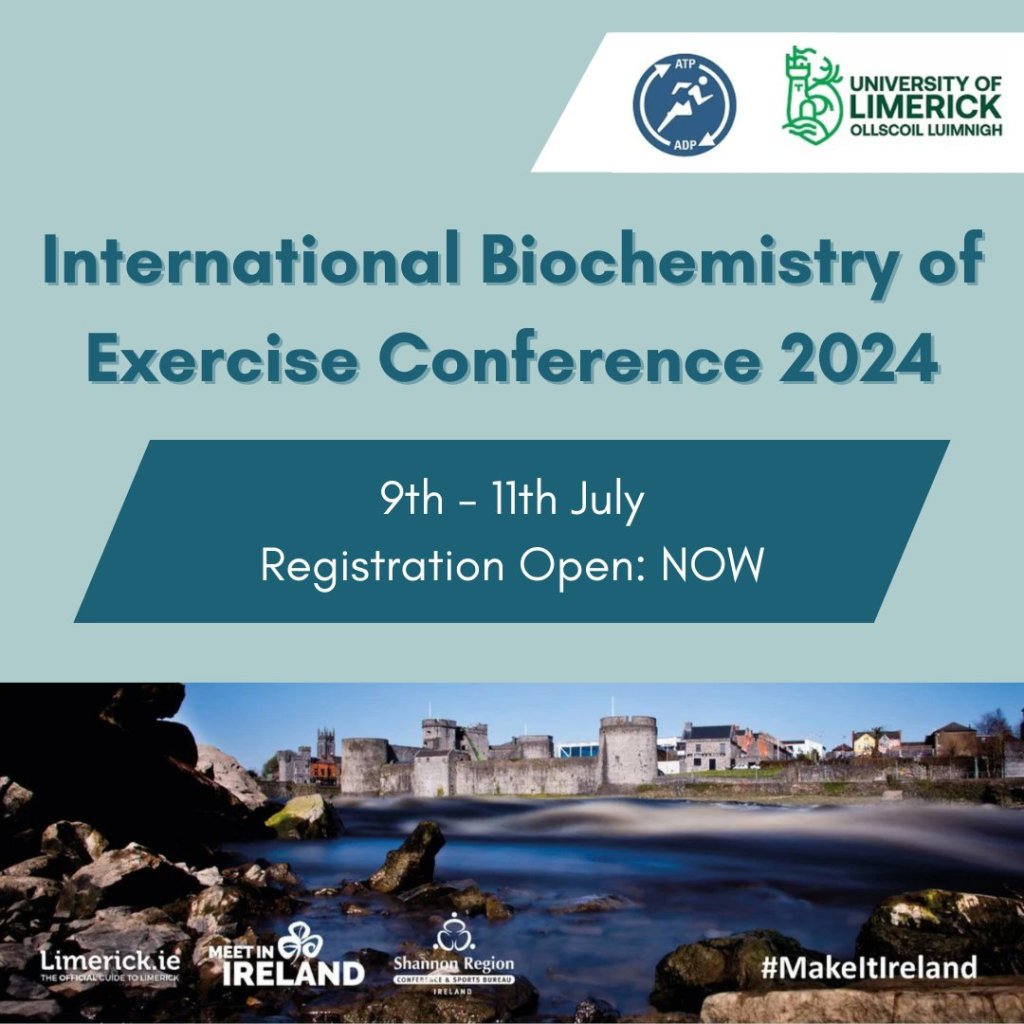
Welcome to part 2 of this blog series. As I mentioned in part 1, we are very proud to be hosting the International Biochemistry of Exercise Conference 2024 here at the University of Limerick.
We hope to welcome you this coming July 9th-11th (Register here). I thought it might be interesting to read about some of what goes on in the background to putting on an international meeting of this scope and magnitude. In Part 1, I wrote about preparing your bid which you can read here. Here in Part 2, I will outline some of the key aspects of organising the conference. Later in the series, I will delve into running the conference itself and the associated aftermath.
Excited and fearful!
As I mentioned closing off the last blog post, the buzz of being awarded IBEC2024 came with a sense of fear and trepidation….now we had to deliver! We received many notes in the following weeks and months from fellow scientists congratulating us on the award and committing to being in Limerick in 2024. All were greatly appreciated. We had a sense that we had an opportunity to make a real impact in the field by putting on a meeting that would facilitate robust scientific discourse, provide an opportunity for the field to get together, network and socialise and finally come to see Limerick and the West of Ireland. It was also a chance for us to put Ireland and UL on the Exercise Biochemistry map. Speaking recently with Dr John Kirwan, who is a faculty alumni of UL having left in the late 90’s, he admitted he was quite amazed and complimentary that UL had developed to be able to host a meeting in this space such as IBEC. So, it is exciting to feel like you can have a big impact on all these fronts. However, the nagging question at the back of my mind was “would they come?”.
The realty is the IBEC community is relatively small on a global scale but it is still an expensive show to run. I don’t mind telling you that the budget runs into the six figures when all speaker travel, accommodation, food and beverages, logistics etc are factored in. With a very small local IBEC community we needed people to travel to make the conference viable. Ireland can also be an expensive place to travel with a rising cost of living crisis happening globally, researcher budgets and funding getting more and more difficult to access and an expansion of conferences in the area to choose from. There was a real fear that we might not get sufficient uptake. But, we had committed and pressed ahead undeterred.
Booking, booking, booking!
We had made some provisional bookings when we were preparing the conference bid, but now it was time to confirm those and book anything that wasn’t already nailed down. We had our dates and venue reserved. With an accommodation crisis locally and nationally it was essential to get provisional bookings at preferred rates made at the three local hotels The Kilmurry Lodge, The Castletroy Park and the Travel Lodge. We also made significant reservations with on-campus accommodation to provide options for all budgets. We wanted this meeting to be particularly ECR focused so this was a big driver here. We also had to confirm the venue for our Trad night which is Cask Limerick.
The Scientific Programme
We had drafted a very broad programme prepared for our bid but now it was time to identify the speakers we wanted and to build the programme around them. We had a number of factors to consider before going out to potential speakers including:
- Scientific excellence
- Diversity and novelty of topics
- Diversity of speakers in terms of career stage, gender, geographical region
- Previous engagement with IBEC
We first identified and invited our keynotes and then in a staged approach reached out to our identified senior invited speakers. Thankfully, we had only two non-responses, one decline due to a family scheduling issue and everyone else accepted. Once we had a skeleton programme in place we put out a call for abstracts. Initially we had reserved 16 prominent oral speaking slots on the mainstage from early-mid career researchers, however, we generated space in the programme to expand that to 20 slots as the quality of abstracts were so high. All abstracts were reviewed by the international scientific committee, and from 88 preferred oral presentations, 20 were selected for oral presentation and all remaining accepted abstracts were diverted to posters totalling 140. At this point, we knew we had a viable conference from a numbers perspective but also that we had an outstanding scientific programme. We are truly honoured by the scientists who will be presenting.
Sponsorship
To keep costs down and the quality of experience high for our attendees, we knew the conference would not be viable without achieving some support and sponsorship from institutions and industry. We knew this when we prepared our initial budget. In a cost of living and inflation crisis, we also knew securing this support would be a difficult task. This involved a lot of cold calling, targeted emails, pressurising contacts and making a case for synergies between the conference and potential sponsors. But thankfully, we used our networks and that of the IRGBE to secure generous support from a number of places. We are most grateful to the following sponsors, without whom we could not run the event. Thank you to Optimum Nutrition, the Health Research Institute UL, Journal of Sport and Health Sciences, Food for Health Ireland, Aurora Scientific, Innovation Zed, UL Provost Office (Prof Shane Kilcommins), The Physiological Society and the American Journal of Physiology – Cell Physiology. We are still seeking sponsors if any businesses are interested in partnering with us!
Final Preparations
Final stage preparations are ongoing. We are still booking some speaker travel as these scientists are in high demand. We are finalising menus, food options, the social programme, bookings for the Soccer tournament, but all of the big rocks are in place. As the early bird registration date is passed we now have a first look at how many registrations we have and are likely to end up with. I had a pretty sleepless few nights before then as the Biochemistry of Exercise community clearly like to leave things until the last minute! My co-organiser Brendan Egan was more chill about the whole thing, but it wasn’t his backside on the line! Thankfully we now know we will have a conference of over 200 attendees, but we are still pushing to get towards a target of 250 to enhance everyone’s networking opportunities and experience.
We are looking forward to and beginning to get excited about hosting everyone here at UL. It doesn’t feel so far away anymore. We will be working hard between now and the meeting to ensure everyone has he best possible experience. Hopefully it will be a wonderful few days!
The final installation in the series will reflect on the running of the conference and the aftermath! More later….
IBEC 2024 will run from 9th-11th July at the University of Limerick. Register here today! See our keynote speakers here, invited speakers here and full programme here.
X Profile for updates on IBEC2024: https://twitter.com/BiochemExercise
Professor Brian Carson is a Professor of Exercise Physiology in the Physical Education and Sport Sciences Department, UL.
Contact: Brian.carson@ul.ie Follow on X @DrBPCarson ORCID

 PESS News & Information