
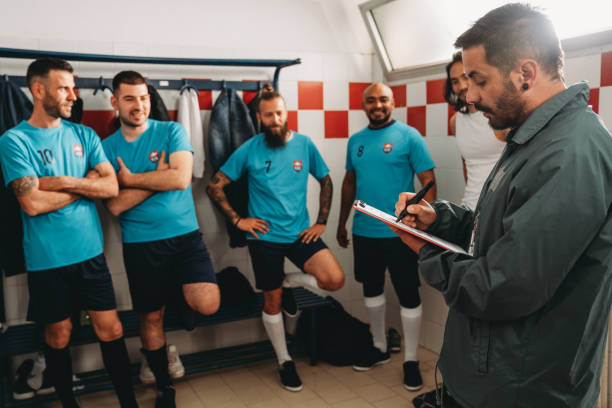
A growing body of research suggests that several key constructs underpinning performance in elite sport – mental toughness, perceived social support, and organisational support – are equally relevant in high-pressure occupational settings. Current PhD research in the PESS Department is examining precisely this, exploring how organisational culture and perceived support influence wellbeing outcomes, and whether mental toughness plays a mediating role in that relationship.
Mental Toughness and the 4Cs Model
Mental toughness is conceptualised as a personality trait comprising four interrelated components (the 4Cs), developed by Clough and colleagues and measured via the MTQPlus assessment. Control describes the extent to which individuals feel in control of their lives and able to manage their emotions under pressure. Commitment reflects the tendency to set goals and follow through on them in the face of adversity. Challenge captures the degree to which individuals embrace change and view difficult situations as opportunities for growth. Confidence encompasses self-belief in one’s abilities and interpersonal confidence in engaging with others.
Collectively, these components describe a psychological profile associated with sustained performance, effective coping, and reduced vulnerability to stress and burnout. While mental toughness has a partly dispositional basis, research consistently demonstrates that it is developable through targeted intervention (Strycharczyk, Clough & Perry, 2021). Importantly, the organisational environments individuals inhabit appear to play a meaningful role in this development – research indicates that social support promotes mental toughness by providing emotional, informational, and instrumental resources (Zhou and Xiang, 2025), and that organisations can actively cultivate mental toughness by promoting inclusive cultures and implementing structured coaching (Ruparel et al., 2023).
Perceived Support, Organisational Culture, and Wellbeing
The relationship between perceived organisational support (POS) and employee wellbeing is well established. Drawing on Organisational Support Theory, a meta-analysis by Kurtessis and colleagues (2017), across 558 independent studies, found significant negative associations between POS and both occupational stress and emotional exhaustion. Conversely, cultures characterised by poor support and excessive demand are consistently associated with deterioration in wellbeing and performance over time.
This is a particularly pressing concern in Ireland, where the ESRI has reported that 18% of all work-related illness is attributable to stress, anxiety, and depression (ESRI, 2015), and where a 2024 survey found that almost a quarter of employees took mental health leave in the preceding year, above the European average of 18%, while only 43% reported that their organisation actively undertook initiatives to support mental health (SD Worx, 2024). Despite increased public discourse around workplace wellbeing, many high-pressure environments continue to lack the empirical evidence base needed to inform targeted, effective intervention.
This relationship is equally well documented in sport. Research consistently identifies perceived social and organisational support as a significant determinant of athlete wellbeing, with inadequate support environments associated with elevated burnout, disengagement, and dropout.
The Study
This research examines these relationships across two distinct high-pressure populations: elite athletes and professionals working in demanding occupational environments, such as emergency services, healthcare, aviation, and professional services. Using a cross-sectional quantitative design, participants complete a validated battery of psychometric instruments assessing stress, burnout, anxiety, mental wellbeing, perceived social and organisational support, and mental toughness via the MTQPlus. The cross-sector design enables examination of whether the psychological mechanisms underlying these relationships are consistent across structurally different high-performance contexts.
The study aims to contribute empirical evidence toward the development of a practical wellbeing and performance framework applicable across high-pressure organisational settings – one grounded in the established literature on mental toughness, organisational culture, and occupational health psychology.
Participation
Data collection is currently ongoing. If you have connections to elite sporting programmes or high-pressure professional environments and would be interested in learning more about participation, please contact Luke McInerney at mcinerney.luke@ul.ie.
- Kurtessis, J. N., Eisenberger, R., Ford, M. T., Buffardi, L. C., Stewart, K. A., & Adis, C. S. (2017). Perceived organizational support: A meta-analytic evaluation of organizational support theory. Journal of Management, 43(6), 1854-1884.
- Ruparel, N., Choubisa, R., Seth, H., & Dubey, S. (2023). Mental toughness for employees: towards conceptual clarity and scale development. International Journal of Productivity and Performance Management, 72(6), 1791-1818.
- SD Worx. (2024). Irish Employees and Mental Health Leave 2024. SD Worx Ireland.
- Strycharczyk, D., Clough, P.J., & Perry, J.L. (2021). Developing Mental Toughness (3rd ed.). Kogan Page.
Zhou, Z., & Xiang, J. (2025). The relationship between physical activity and mental toughness among Chinese university students: the chain-mediated role of self-esteem and social support. Frontiers in Psychology, 16, 1592192.
Luke McInerney is a PhD student in the Department of Physical Education & Sport Sciences, UL.
Contact: mcinerney.luke@ul.ie LinkedIn
Discover more from PESS News & Information
Subscribe to get the latest posts sent to your email.
