
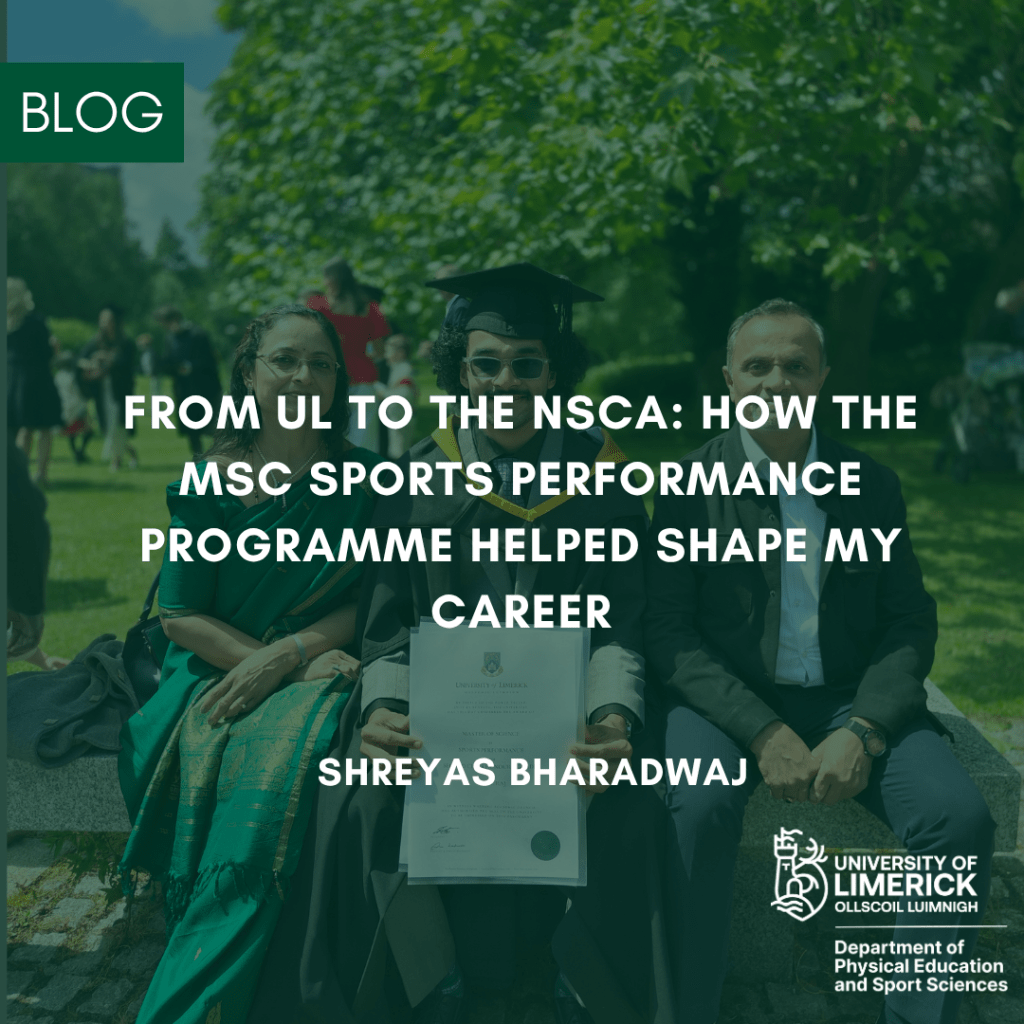
Shreyas Bharadwaj, MSc Sports Performance Graduate
My name is Shreyas Bharadwaj, and I recently graduated from the MSc Sports Performance programme at UL. I have over three years of multisport strength and conditioning experience, and I am now returning to India to take up a new role as Head of Operations for the National Strength and Conditioning Association (NSCA).
When I arrived at the University of Limerick to begin the MSc Sports Performance programme, I was looking for an opportunity to expand my knowledge, challenge myself professionally, and learn within one of the world’s leading sport science environments. Looking back, it was a decision that transformed both my career and personal development.
Choosing UL
I was drawn to UL because of its reputation for having some of the best sport science facilities in the world. The MSc Sports Performance curriculum aligned perfectly with my practical coaching experience and previous qualifications, making it an ideal next step in my professional journey.
My goal was simple: to learn from a world-class institution and elevate my knowledge and coaching practice. What I gained went far beyond the classroom.
Learning Through Experience
One of the most rewarding aspects of the programme was the emphasis on applying theory to real-world challenges. The Problem-Based Learning (PBL) modules were particularly impactful, as they encouraged us to integrate knowledge from different areas and use it to solve practical performance problems.
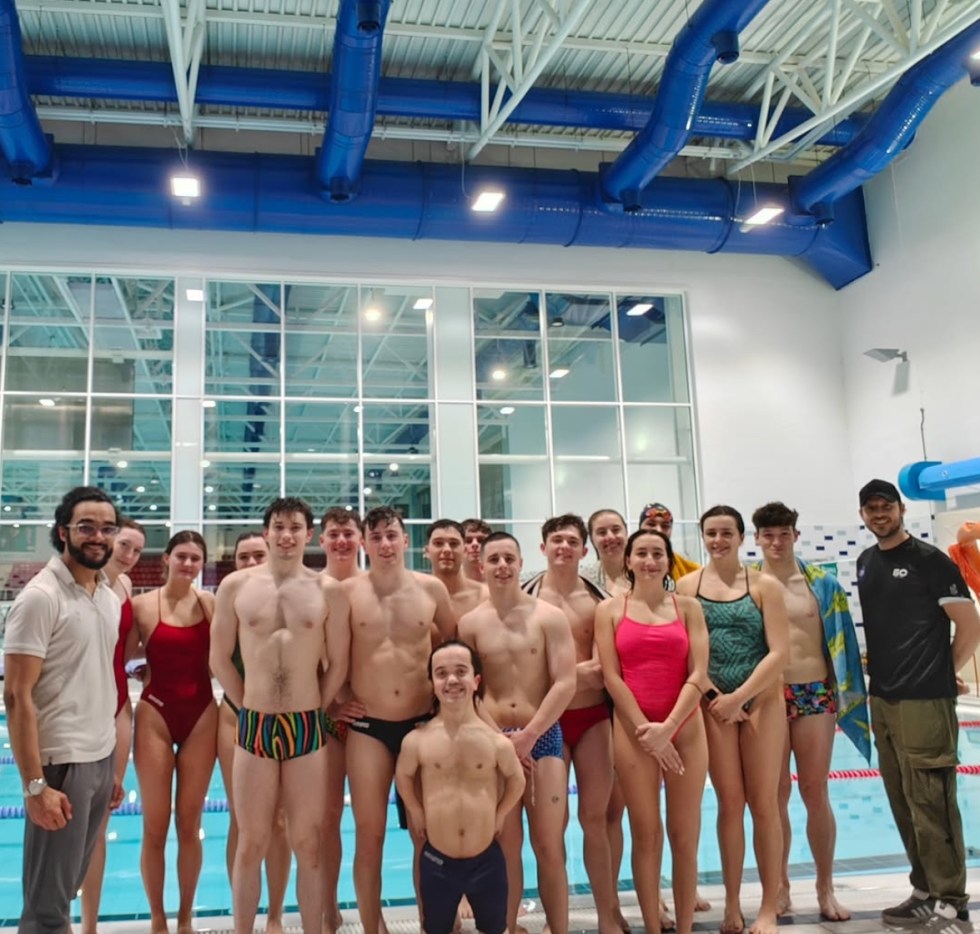
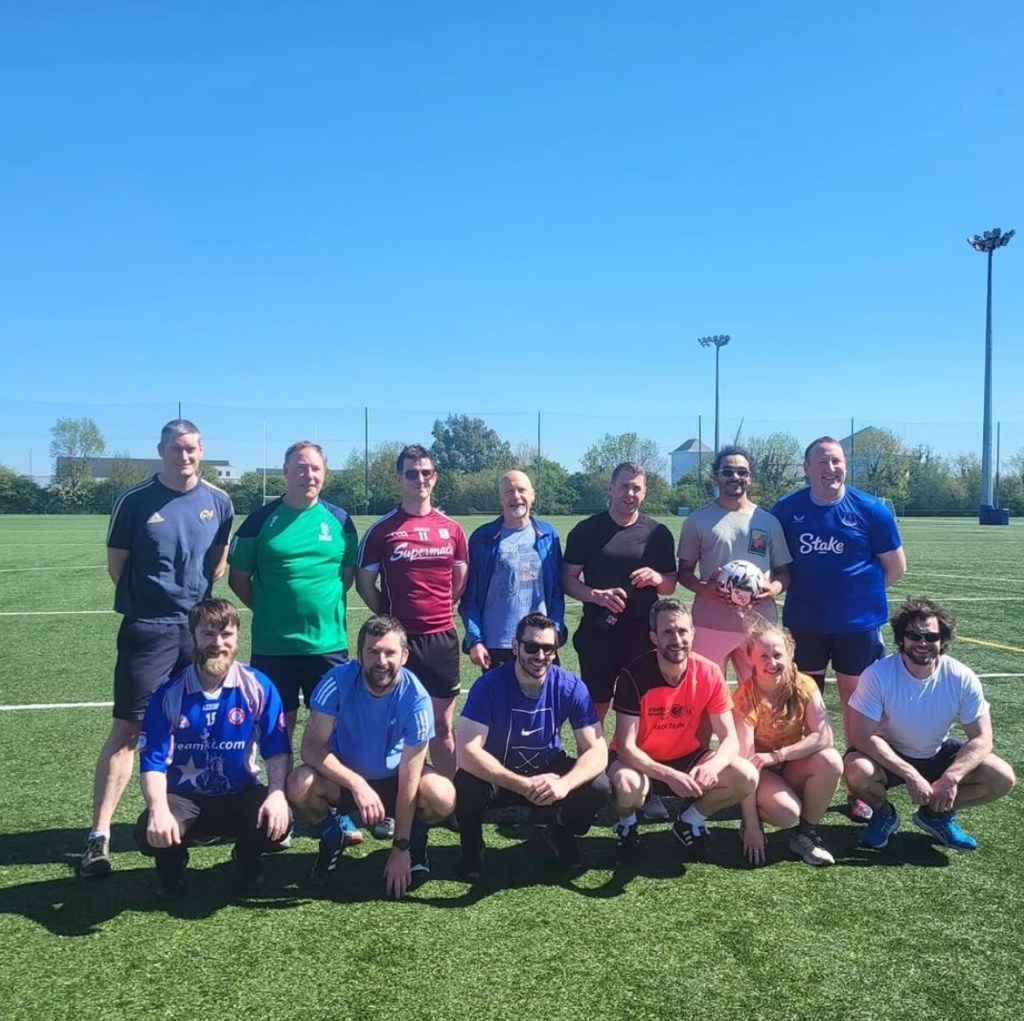
Alongside my studies, I was fortunate to gain a wide range of valuable experiences across the University. I volunteered with UL MedX, completed an internship with UL Athletics under the mentorship of internationally respected coaches Drew and Hayley Harrison, served as Lead Strength and Conditioning Coach for UL Swim Club, contributed to practical strength training sessions within PESS, and assisted Professor Mark Lyons with exam invigilation and grading.
These opportunities allowed me to develop professionally while applying what I was learning in real performance environments.
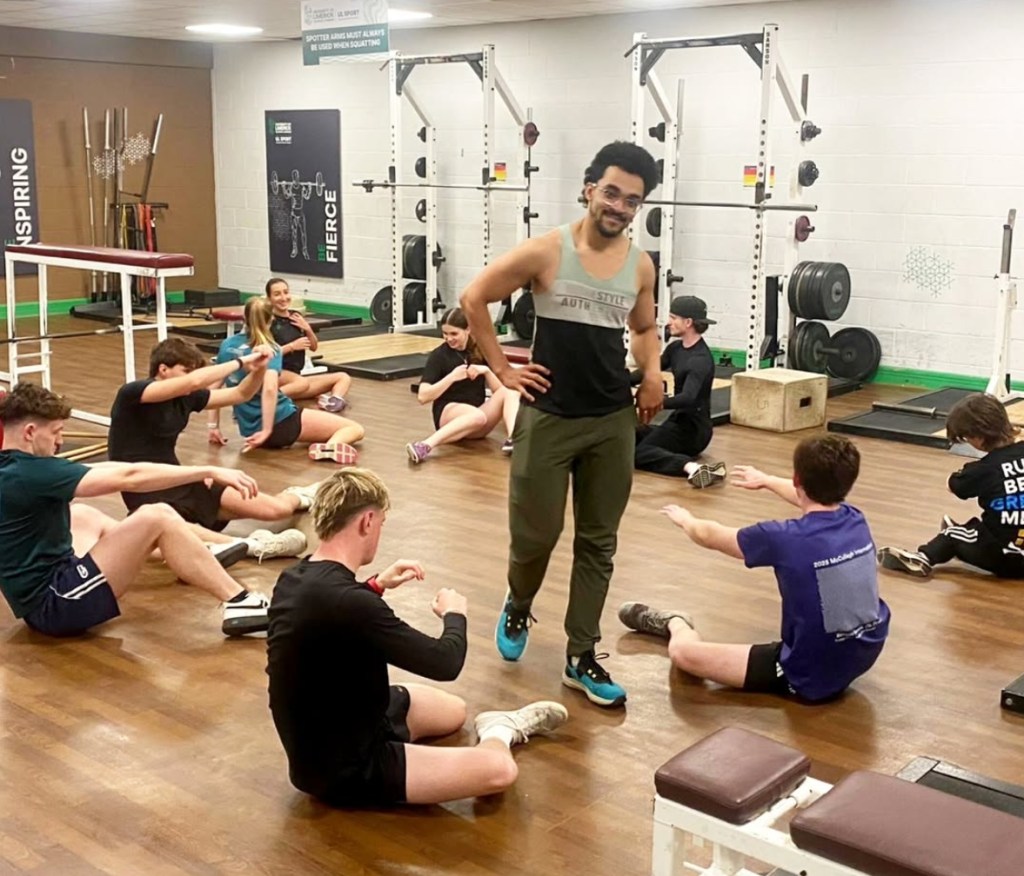
Developing as a Coach and Practitioner
The programme significantly enhanced both my confidence and competence as a coach.
One of the most important habits I developed during my time at UL was consistently using research to inform practice. Rather than relying solely on experience, I learned to critically evaluate scientific evidence and apply it within coaching settings.
For example, during my work with UL Swim Club, I used insights from 13 high-quality research papers on strength and conditioning for swimmers to guide programme design and athlete development. Today, I continue to apply these evidence-based principles in my work with the NSCA and when teaching coaches preparing for the Certified Strength and Conditioning Specialist (CSCS) qualification.
The programme challenged me to think critically, justify my decisions, and continuously seek the best available evidence to support athlete performance.
The Value of Mentorship
It would be difficult to identify a single standout moment from my time at UL because so many experiences contributed to my development. However, one person who had a profound impact on my journey was Professor Mark Lyons.
Throughout the programme, he provided guidance, support, and mentorship whenever I needed it most. His encouragement and belief in my potential played a significant role in helping me succeed both academically and professionally.
Opening New Opportunities
Studying at UL opened countless doors.
Beyond the qualification itself, I gained access to an extensive professional network and learned from some of the brightest minds in sport science and high-performance coaching. Exposure to international standards of coaching, research, and professional practice broadened my perspective and helped prepare me for future leadership roles.
The combination of academic learning, practical experience, and professional networking significantly strengthened my CV and ultimately helped me secure exciting career opportunities.
Advice for Future Students
For anyone considering the MSc Sports Performance programme, my advice would be to gain practical coaching experience before beginning the course.
Having real-world experience allows you to better understand the concepts being taught and appreciate how they can be applied in practice. The more coaching experience you bring into the programme, the more you will take away from it.
A Life-Changing Experience
My time at UL was genuinely life-changing.
The MSc Sports Performance programme challenged me to grow as a coach, practitioner, and professional. It helped me develop lifelong friendships, build meaningful professional relationships, and gain experiences that have shaped the next stage of my career.
Pursuing a master’s degree in Sports Performance at UL was the best professional decision of my life. My knowledge, confidence, and practical expertise evolved immensely, and the opportunities that followed have exceeded anything I could have imagined.
Find out more about the MSc Sports Performance Programme here: https://www.ul.ie/gps/course/sports-performance-msc
Discover more from PESS News & Information
Subscribe to get the latest posts sent to your email.
