
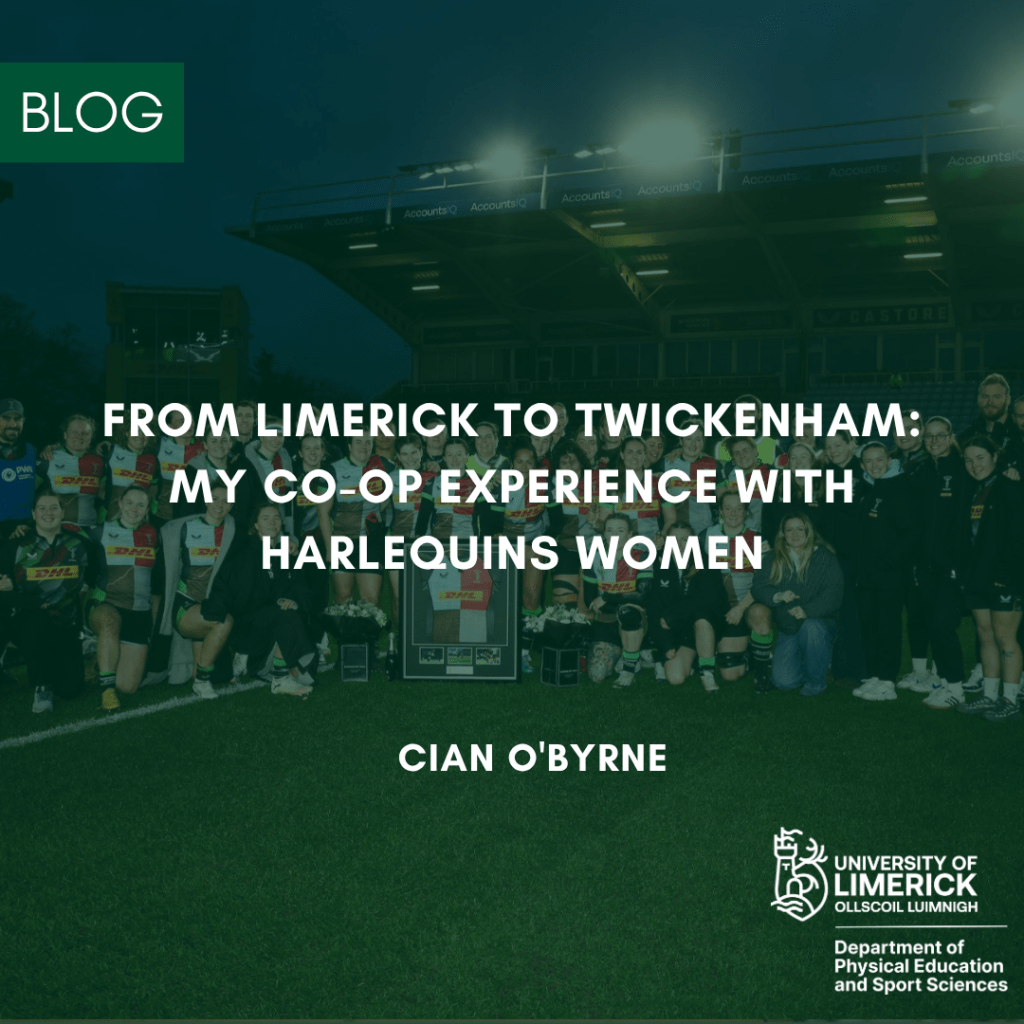
By Cian O’Byrne, BSc Sport and Exercise Sciences
My name is Cian O’Byrne, and I have just completed Year 3 of the BSc Sport and Exercise Sciences programme at the University of Limerick. During my co-op placement, I had the opportunity to work with Harlequins Women in Twickenham, England.
About Harlequins Women
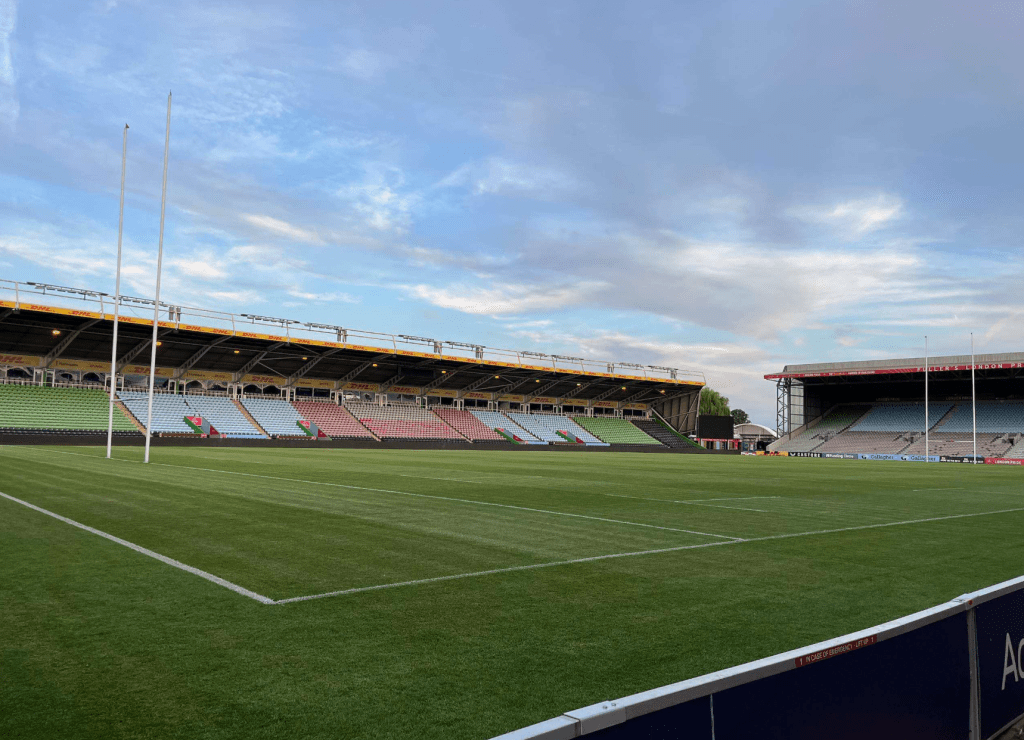
Harlequins Women are a professional rugby team playing in the Premiership Women’s Rugby (PWR) in England. The team is based in Surrey and plays its home matches at The Stoop in Twickenham.
Harlequins is one of the most recognisable rugby clubs in the world, with many international players from across the globe currently representing the club. Behind the scenes, multiple departments work together, with elite practitioners striving to ensure the team is in the best possible position to compete at the highest level in the league.
My Role
One of my main responsibilities was athlete monitoring using VALD systems each week.
Using this technology allowed us to make data-informed decisions to ensure players were ready to perform and helped identify anyone who needed to be modified or checked in with by the Performance Team. I reported the results in the Performance Meeting the following day, where we discussed the findings and created action points.
During my placement, I gained experience with a wide range of tests, including Countermovement Jump (CMJ), Nordic variations and capacity testing.
Another major responsibility was assisting with GPS monitoring alongside the sports scientist.
Each training session was coded live, enabling us to monitor how the session and athletes were tracking and whether they were meeting the targets set before training. For example, during speed sessions it was important to determine whether players had reached greater than 90% of their maximum velocity, while also identifying anyone who still needed to achieve this later in the week before matchday.
Once each session was coded, we exported the data using software such as Excel and Power BI before publishing training and match reports.
I also assisted with iMG mouthguard monitoring, which I found particularly interesting because it is a relatively new technology with significant ongoing research.
Players wore the instrumented mouthguards during both training and matches. The mouthguards measured impacts in both the linear and axial planes, and if an impact exceeded the predetermined thresholds, the medical team was alerted to complete the appropriate Head Injury Assessment (HIA) protocols.
Skills I’ve Developed
Since starting my placement, I have developed a range of skills that have helped me become a better practitioner.
Communication
My communication skills improved considerably throughout the placement.
During meetings, I became more concise in my reporting so that only the important points were discussed and a clear plan of action could be created.
When speaking with players, I learned how to effectively explain testing results by focusing on the key messages without over-explaining. This improved both my confidence as a sports scientist and the quality of those conversations.
Critical Thinking
My critical thinking also developed significantly.
When I first started creating resources in Power BI, I often found myself overcomplicating them. As the software was new to me, I sometimes included information and visualisations without fully understanding their purpose.
With guidance from the staff, I learned to take a step back and focus on the main objective of each resource. Similar to how my communication improved, I began prioritising only the most relevant information and keeping things simple.
This helped me better understand the reasoning behind decisions and allowed me to clearly explain the rationale behind each metric, visualisation and recommendation.
Standout Experiences
There were several experiences that stood out during my placement.
One was taking increased responsibility working with players and staff on the University pathway programme, where I looked after GPS and testing data during their season while assisting with athlete management as players integrated with the senior squad.
Another major milestone was managing a live training session for the first time, including GPS monitoring, iMG monitoring and completing the post-session exports independently.
I was also fortunate to complete some CPD with the Harlequins Men’s team. I shadowed the men’s sports scientist and Performance Team during a training day, which provided an invaluable opportunity to see how another elite environment operates.
The sports scientist was incredibly generous with his time, and I learned a great deal that day. I was able to apply many of those learnings when I returned to working with the women’s team.
I can’t thank both the women’s and men’s sports scientists enough for their support.
How My Degree Prepared Me
I believe my degree prepared me to make the most of my placement experience.
It gave me the confidence to understand the fundamentals of what was happening within the programme and allowed me to build on those foundations.
Because athlete monitoring formed such a large part of my role, I regularly drew on learning from several modules throughout my degree.
For example, my Year 2 module with Mark Lyons helped me understand and identify the different phases of a Countermovement Jump, while my Year 3 project with Professor Tom Comyns gave me a strong understanding of meaningful change and coefficient of variation.
These concepts proved invaluable when interpreting testing data, understanding why results had changed and deciding whether those changes required action.
My Biggest Challenge
At the start of my placement, I found myself dwelling on mistakes and struggling to move on from them.
After speaking with several people, I realised that mistakes are part of learning. The advice that stayed with me was:
“W.I.N. – What’s Important Now?”
This encouraged me to focus on the remainder of the training day instead of one moment that had already passed.
I put this mindset into practice and gradually began treating mistakes as opportunities to learn.
I’m happy to say that this has now become one of my strengths.
The Most Rewarding Moment
The most rewarding part of my placement was undoubtedly working my first matchday at The Stoop.
It was one of my main goals going into the placement.
The sports scientist broke every aspect of the role down step by step, and together with the wider Athletic Performance Team, provided incredible support while I learned.
After shadowing a match against Ealing at the end of January, I worked my first full match the following week against Exeter.
Walking onto the pitch knowing all the hard work had paid off was a surreal experience.
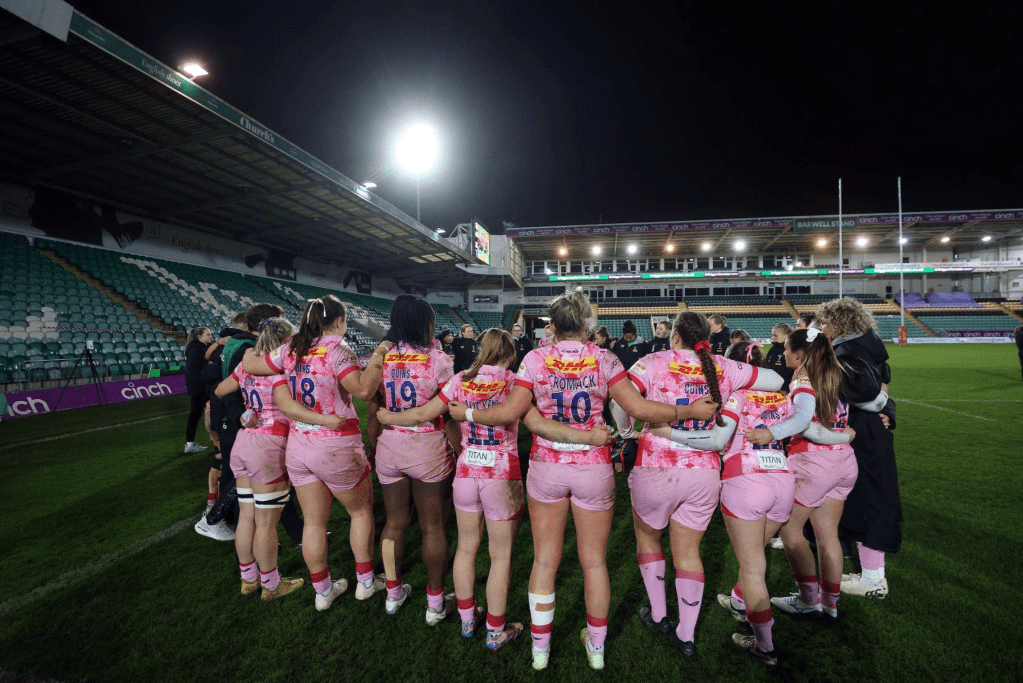
Standing in the team huddle after the game reaffirmed that this was exactly where I wanted to be and confirmed that I had made the right choice for my placement.
I was fortunate to work several more games throughout the season and never took any of those opportunities for granted.

Looking Ahead
This placement has confirmed the career path I want to pursue.
Learning from the Athletic Performance Team showed me what it truly means to work as a sports scientist, and I genuinely enjoyed every aspect of the role.
It is definitely the type of career I hope to pursue in the future.
Advice for Future Co-op Students
I would recommend trying to gain experience in a sporting environment whenever possible.
It gives you the opportunity to put the theory you’ve learned into practice and helps you identify which career path interests you most, whether that’s sports science, strength and conditioning, physiotherapy or another area of performance sport.
Final Reflections
This placement has been the highlight of my degree so far.
I am extremely grateful to everyone at Harlequins for their support and guidance throughout my placement.
The experience has challenged me, developed me and confirmed that I want to build my future as a sports scientist.
Discover more from PESS News & Information
Subscribe to get the latest posts sent to your email.
