
Written by Rian Sloan
This summer, I successfully applied for and completed a funded PESS research internship. Primarily, this involved conducting lab-based research examining the metabolic and mechanical responses during running and how they differ between trained runners and active controls. This study improves our understanding of the potential differences in metabolic (e.g. oxygen cost and energy system use) and mechanical (e.g. stride rates and length) responses to exercise between trained runners and active controls. It has the potential to inform the design of future studies examining athlete performance and health (e.g. bone health) using methods that represent the habits of runners and non-runners.
I completed this internship under the supervision of Dr. Jennifer Higgins, Dr. Mark Lyons and Dr. Will Hughes. As a student who just finished my 2nd year of the BSc. Sports and Exercise Science, I had little to no immersive research experience. My supervisors were incredibly supportive and provided extremely helpful guidance throughout my eight weeks. We had weekly meetings throughout the internship, which I found very useful. These meetings ensured accountability and an open environment to ask questions, discuss challenges and receive valuable feedback.
Throughout my studies, I have developed a keen interest in sport and exercise physiology related to athletic performance. When this opportunity arose, I was delighted to receive funding enabling me to spend 8 weeks in and out of the lab; collecting, analysing and interpreting data, gaining first-hand experience in interdisciplinary research. The project involved collecting and analysing key physiological variables, including V̇O₂max, running economy, blood lactate responses, and interpreting lactate (LT1/LT2) and ventilatory (VT1/VT2) thresholds. I entered the internship with an open mind, few expectations and a lot of nerves, as this was a new experience for me. Within the first meeting, I had a clear understanding of my role and the goals of the project and the nerves were settled.
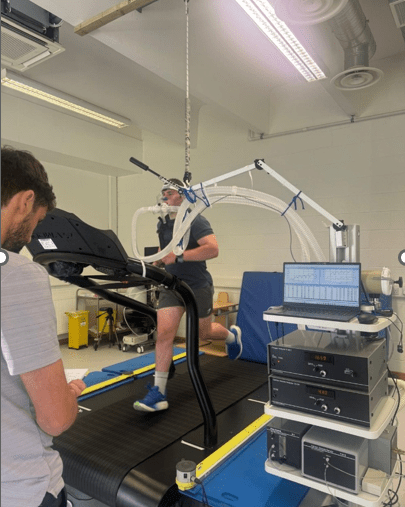
My first couple of weeks were spent learning research skills, reviewing relevant literature whilst also being introduced to new equipment within the lab. I have gained invaluable experience in all aspects of the research process (e.g. obtaining ethical approval, recruitment, method development, data analysis and interpretation) as well as hands-on experience using and troubleshooting systems such as the Moxus gas analysis system, the OptoJump and the ForceDecks.
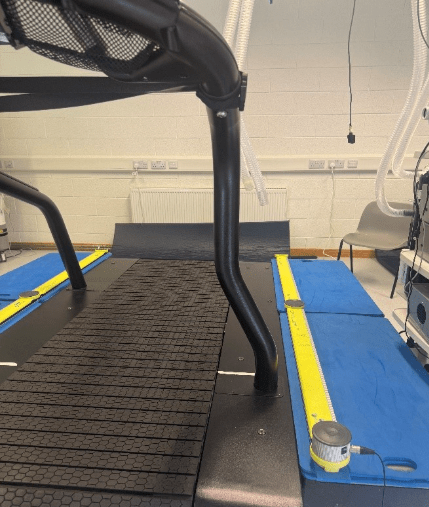
A lot of time was spent in the lab pilot testing and troubleshooting, as one obstacle led to another. Between trying to validate the OptoJump data, not typically used on a treadmill, and finalising the procedure for the metabolic testing, every challenge required careful consideration and problem-solving. The last few weeks involved final pilot testing to determine what methods and procedures worked best, while also analysing and reporting back to the supervisory team on data collected. I wrote and submitted an abstract to the Physiological Society and hope to present my findings at an upcoming conference in October. I have also contributed to a manuscript which is currently being prepared for publication.
Completing my PESS internship has been an invaluable experience and has given me a real insight into the challenges of conducting laboratory-based research. It has helped me build confidence within the lab and develop many new skills, from problem-solving to data analysis, interpretation and academic writing. I have learned and achieved far more over the last 8 weeks than I originally had expected, and I know that this experience will benefit me throughout the rest of my degree and my future career. I would highly recommend a PESS internship to anyone interested; it will be an amazing and beneficial experience that you won’t regret.
Discover more from PESS News & Information
Subscribe to get the latest posts sent to your email.
