
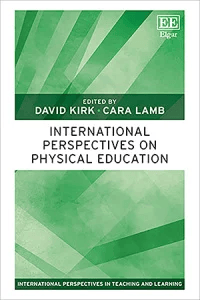
In our chapter in International Perspectives on Physical Education, Carmen Barquero-Ruiz and I examine the Senior Cycle Physical Education (SCPE) framework: to our knowledge, the first national curriculum anywhere to formally adopt a models-based approach.
What makes SCPE different?
SCPE is a non-examinable framework for all senior cycle students, built around six curriculum models: Health-Related Physical Activity, Sport Education, Contemporary Issues in Physical Activity, Adventure Education, Teaching Personal and Social Responsibility, and Teaching Games for Understanding. Rather than prescribing fixed content, it sets out each model’s essential elements and intended learning outcomes, giving teachers the autonomy to select, adapt and combine models to suit their students and context. The aim is lifelong engagement with physical activity, personal growth and holistic well-being.
The challenges
That flexibility is both a strength and a vulnerability. We identify three main challenges in enactment:
A paradigm shift. Placing the learner ‘at the centre’ asks teachers to move from didactic instruction to facilitating learning, which can unsettle long-held professional identities.
Uneven knowledge. Well-researched models such as Teaching Games for Understanding and Sport Education were favoured, while less-developed models such as Health-Related Physical Activity received less attention, reinforcing the dominance of invasion games.
Insufficient support. SCPE arrived alongside examinable Leaving Certificate PE and junior cycle reform, and significantly less in-service professional development opportunities were provided for teachers in comparison to LCPE.
Some positive steps
Three supports made a real difference. First, communities of practice: teachers shared ideas, planned together and kept the conversation going on WhatsApp between sessions. Second, the Teaching Council made curriculum models a compulsory part of all PE teacher education degrees, so newly qualified teachers now arrive ready to teach through models. Third, a strong network of formal (Oide, Education Centres) and voluntary (PEAI, PETE Ireland) professional development provided workshops and resources.
Lessons for policy and practice
For countries considering similar reform, the Irish experience suggests that curriculum change should be evidence-based and continually researched; that teachers’ voices must be heard from design to implementation, so change is owned rather than imposed; that in-service support and pre-service teacher education must be reformed together; and that profound change should be phased in gradually rather than alongside competing reforms. Researchers also have a role in developing resources for under-researched models, so that all six can stand on equal footing.
Ireland’s framework offers a template others can adapt. Its success, however, depends on teachers having the time, knowledge and support to make it their own.
Source: Kirk, D., & Lamb, C. (Eds.). (2026). International perspectives on physical education. Edward Elgar Publishing.Chapter in focus: Barquero-Ruiz, C., & O’Keeffe, B. (2026). An exploration of the challenges and opportunities of enacting a novel models-based curriculum framework: A case study from Ireland.
Dr Brendan O’Keeffe is an Associate Professor in Physical Education in the Department of Physical Education and Sport Sciences, UL.
Contact: Brendan.okeeffe@ul.ie Follow on twitter: @BrendanOK_
Discover more from PESS News & Information
Subscribe to get the latest posts sent to your email.
