
Shaky Beginnings
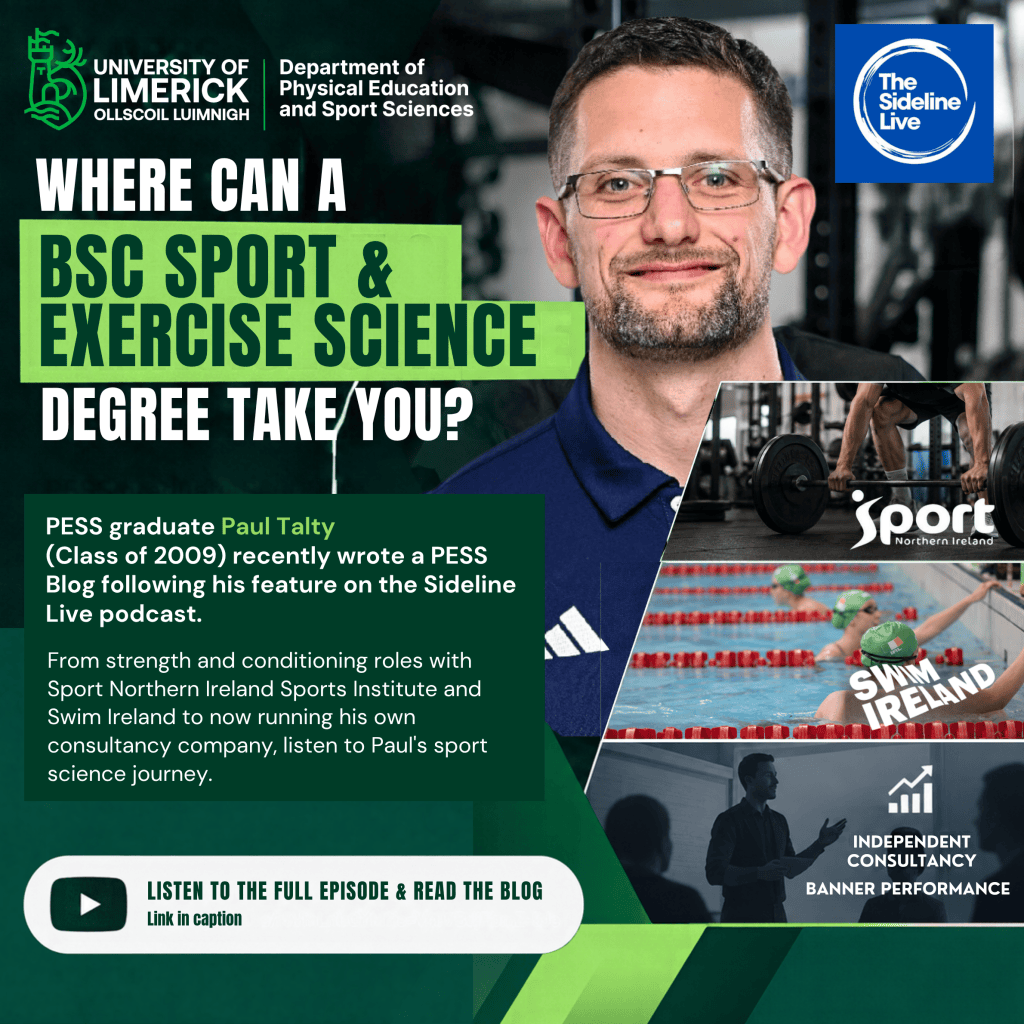
Long long ago (2004) when I was going in to my Leaving Cert year I had to figure out what to put on the CAO form. Taking my propensity to take paths less travelled I opted for the (at that time) little known subject are of Sport & Exercise Sciences in UL. The fact that I couldn’t pronounce some of the prospective modules was a strange attraction point for me and a point of complete fear for my poor parents. What followed were 4 of the best years of my life in Limerick as I met some brilliant people and got an exposure to science in a way that I never knew really existed and recognized a variety of less trodden career paths opening up before me. I was fortunate enough to land a co-op in a semi-pro rugby club in New Zealand which really kickstarted my interest in S&C but the education we received in final year about the epidemiology of exercise and health and the passion of lecturers such as Drs Ciaran MacDonncha and PJ Smyth (RIP) convinced me (temporarily) that exercise as medicine was the route to follow, so off I went on to pursue an MSc in Sport & Health Sciences at the University of Exeter.
Two Roads Diverged….
During my time in Exeter I was fortunate to volunteer with a stroke rehab group and experience the challenges of coaching people in a very different physical condition to those I had encountered in NZ but provided me with one of the most rewarding experiences of my time there and challenged my coaching and communication skills in a way that I believe have stayed with me throughout my career. Despite all of the positives, I still had a desire in the back of my head to work within more elite athletic environs and so I began to pursue professional accreditations in S&C through the NSCA and the UKSCA. Upon graduation I moved to Belfast and began working as a self employed PT, once again experiencing a significant shift in the population I was engaging with further broadening my coaching and communication skillset. By now, I was determined to move into the sporting sector and was advised by the lead S&C coach at the Sport Northern Ireland Sports Institute (Dr Michael Johnston, now of British Athletics) to broaden my sporting experience. This led me to my first full time S&C role working at the University of Coventry where I had the opportunity to coach hundreds of student-athletes across a huge array of sports from Octopush (google it) to wheelchair rugby to cricket to athletics. Once again, I was being stretched and challenged in my ability to find coaching, organizational and communication solutions for groups and individuals with a wide variety of needs and challenges but with similar end goals in mind. During this time I attained my professional accreditation with the UKSCA and successfully interviewed for a role at the previously mentioned SNISI, achieving a significant milestone for myself personally as I now had the opportunity to test myself with truly elite practitioners and athletes.
Onwards and Upwards
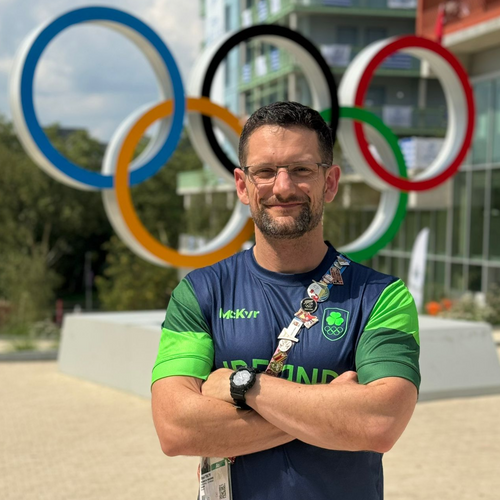
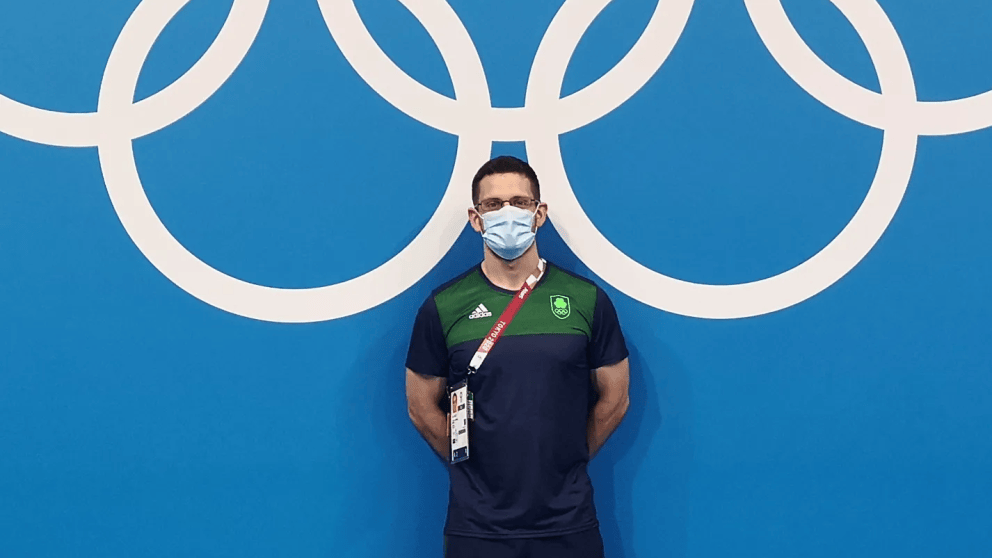
Over the 5.5 years that followed, I once again had the opportunity to work with athletes from an array of sports, backgrounds, and stages of development. My first day on the job I was handed responsibility for a group of 2012 Olympians in a sport I had absolutely zero experience in – sailing. This was a common theme as over the years I was presented with rowers, judokas and a track and field athlete with cerebral palsy. I was exposed for the first time to the use of force plates for performance testing and monitoring (the only facility in the country at the time to have access to such technologies). I was working alongside world class S&C coaches who have gone on to coach multiple world and Olympic medallists, as well as physios, nutritionists, physiologists, psychologists, and performance administrators all of whom had a perspective and knowledge that I was able to pick from and learn from. This really was where my schooling in performance sport took place and I was enormously fortunate to be surrounded by such supportive and talented practitioners. Then came the sprinkling of good fortune that we all require along the way when no other S&C coach was available to take on a new intake of swimmers that were being supported by SNISI and I put my hand up for the opportunity. After the Rio Olympics, Swim Ireland had embarked on an ambitious performance programme bringing in fresh voices from a hugely successful UK system and revitalizing their support network. Ten months later a key member of this new team moved back to the UK and due to the interactions I had in that time and the support I was able to deliver from Belfast, I was asked to step in to a newly created role as Associate Head of Performance Services for the NGB based in Dublin. Here now was an opportunity to influence the performance trajectory of some of our finest Olympic hopefuls at the NGB level and one I took on with gusto. Over the following 6 years as we built towards firstly the Tokyo Olympics and then the Paris games, navigated a global pandemic, and grew the department to take in a new performance hub in Northern Ireland and expand our support to development pathways. This culminated in a scarcely believable level of success at the 2024 Olympic Games in Paris. From Rio in 2016 when Team Ireland had 3 swimmers and 1 diver in attendance and made a single semi-final in swimming and a final in diving, we now had a team of 12 swimmers, 2 divers with 5 swimmers competing individual semi-finals/finals, winning 3 medals, and for the first time ever entering both a men’s and women’s relay team in the relay medley events.
New Beginnings
In the months just prior to my move to Swim Ireland, I had embarked on a self-funded PhD programme at the University of Salford researching the strength characteristics that underpin change of direction performance in Gaelic football. This was something that proved difficult to juggle alongside a very demanding role in Swim Ireland all at a time of significant personal change as I welcomed my two kids into the world. So, following the Paris Olympics an opportunity arose to support the Monaghan Senior men’s Gaelic footballers for the coming two years and this provided me with the impetus to return to my roots in a way and create more time and space to finalise my studies. Taking on this role also allowed me some additional space to widen what I could provide to the wider performance support community by doing some consultancy with other sporting clubs/bodies and deliver education support to practitioners in physio clinics and gyms. A great two years followed as I finally got to experience the wonders of match-day in Croke Park and being a truly embedded part of a team-sport setting. I have now moved on after those two years to take up a similar role with the Tyrone senior footballers and I am fast approaching the deadline for submission of my thesis. All in all, it is a busy and challenging but ultimately rewarding period now as I look forward to new challenges and opportunities ahead, knowing that none of this would have been possible without rolling the dice 22 years ago and pinning my hopes on 4 years in UL.
Advice to The Next Generation
The landscape for sport science students and new grads has changed immeasurably since I came through UL. But a couple of key pieces of advice I would give to anyone:
- Whatever opportunity presents itself, take it and do the best you can with it
- Gain as broad a set of experiences as possible in dealing with members of the public – in the new era of AI, being able to communicate in a truly human way is going to be the skillset that separates
- Recognise the broad skillset that you are developing during your time in UL; it is going to give you opportunities that you don’t know exist
- Enjoy the journey
Listen to Paul’s feature on the Sideline Live podcast: https://youtu.be/c57EpRq-BGs
Interested in our BSc Sport & Exercise Science Programme? Learn More: https://www.ul.ie/study/undergraduate/sport-and-exercise-sciences-bsc
For enquiries contact SES@ul.ie
Discover more from PESS News & Information
Subscribe to get the latest posts sent to your email.
