
What is ISPAH?
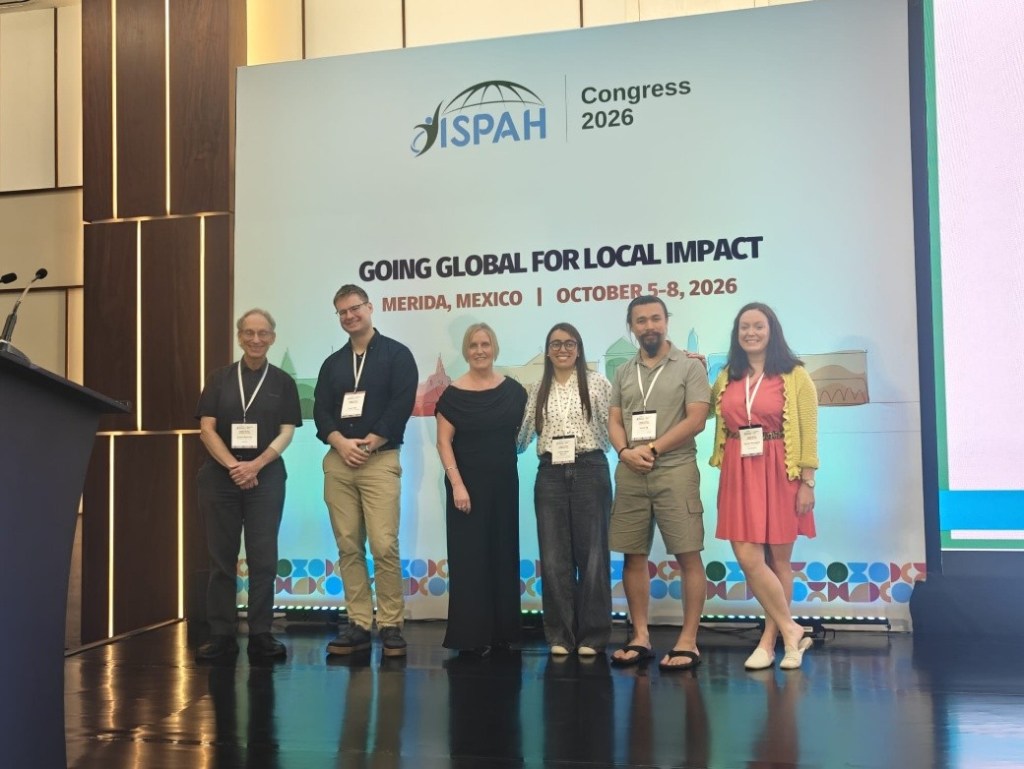
The International Society for Physical Activity and Health (ISPAH) Congress is the main global meeting point for researchers, practitioners, policymakers and advocates working to promote physical activity and health, and is held every two years. The 11th ISPAH Congress took place in Mérida, Yucatán, Mexico, from the 5th to the 8th of October 2026, hosted by Mexico’s National Institute of Public Health (INSP) and the University of Texas at Austin, with co-sponsorship from the Pan American Health Organization. It was the first ISPAH Congress held in a Spanish-speaking country.
The theme of this year’s Congress was “Going global for local impact: Towards a comprehensive equity approach to physical activity and health”, which asked how global evidence and collaboration can be turned into context-specific solutions that make physical activity more equitable. The keynote speakers were Deborah Salvo (University of Texas at Austin), Jennifer Roberts (University of Maryland), Ulf Ekelund (Norwegian School of Sport Sciences) and PESS’s own Professor Catherine Woods.
What were PESS researchers doing at ISPAH?
PESS was represented in Mérida by Professor Catherine Woods, Dr Kevin Volf, Dr Kwok Ng, Ms Juliana Mejía Grueso and Adjunct Professor Adrian Bauman. Much of the research presented came from IMPAQT, a consortium applying the Physical Activity Environment Policy Index (PA-EPI) framework in six European countries.
On Tuesday 6th of October, Adrian Bauman chaired a symposium titled “Governance, policy, and systems innovation for active societies”, in which Kevin Volf presented twice on behalf of PESS colleagues who could not travel. The first presentation, submitted by Dr Enrique García Bengoechea, described how IMPAQT built a repository of Best Practice Exemplars that countries can use to benchmark their physical activity policies: 79 of 131 candidate policies, from 25 countries, made the final list. The second, submitted by Dr Sven Messing, set out eight overarching recommendations for building equity into physical activity policy, with examples from six EU member states, including the commitment in Ireland’s National Physical Activity Framework that no one, or no setting, is left behind.
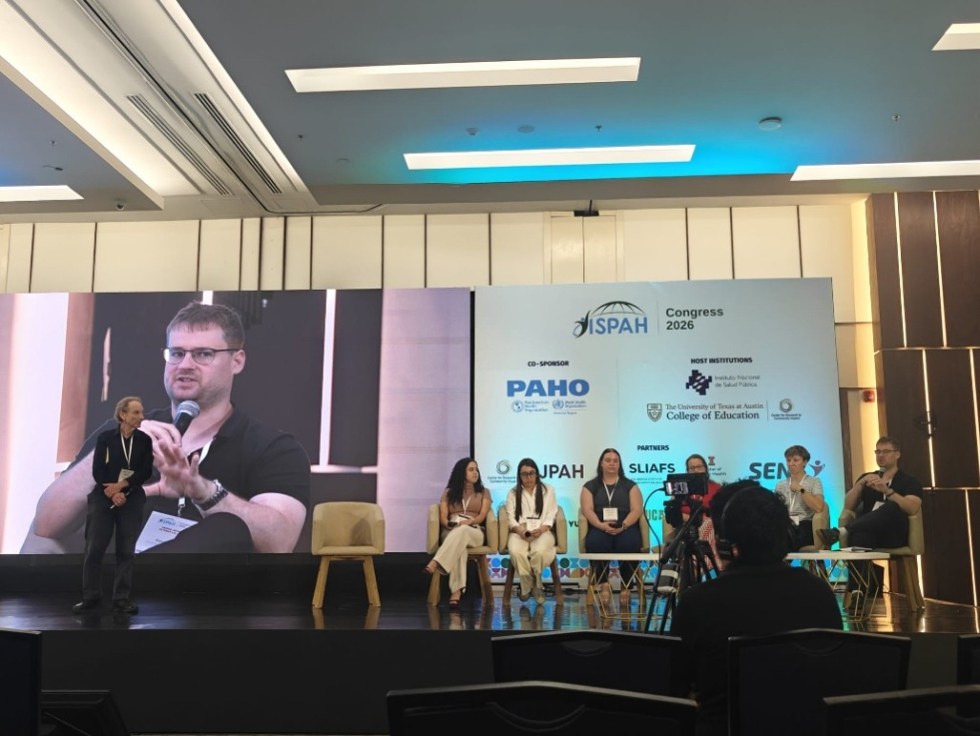
Also on Tuesday, Kwok Ng took part in a debate asking “Are whole-school approaches or targeted PE interventions more effective for increasing physical activity?”. Drawing on research data from Ireland’s Active School Flag programme, he made the case for whole-school approaches.
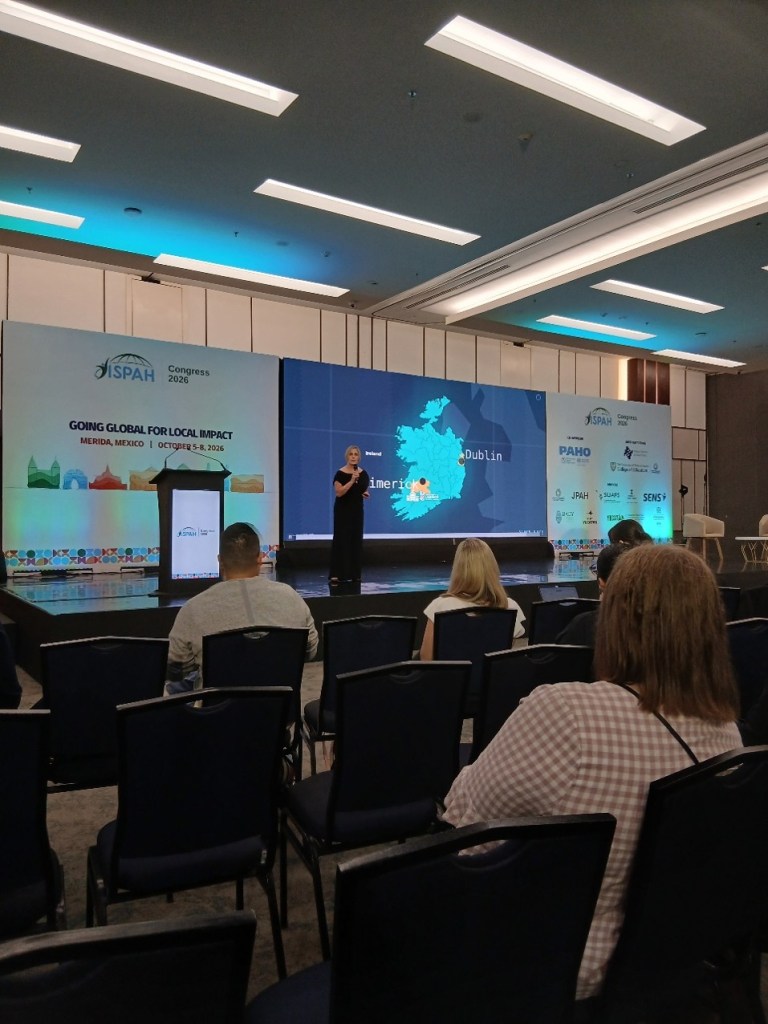
On Wednesday 7th October, Catherine Woods delivered her keynote address. She introduced delegates to the Irish physical activity research context, the University of Limerick and PESS, and traced the slow process of getting physical activity onto Ireland’s policy agenda and implemented, framing it through her own children growing from childhood into adolescence. Presenting PA-EPI policy research from IMPAQT, she characterised physical activity and policy as having a “love–hate” relationship.
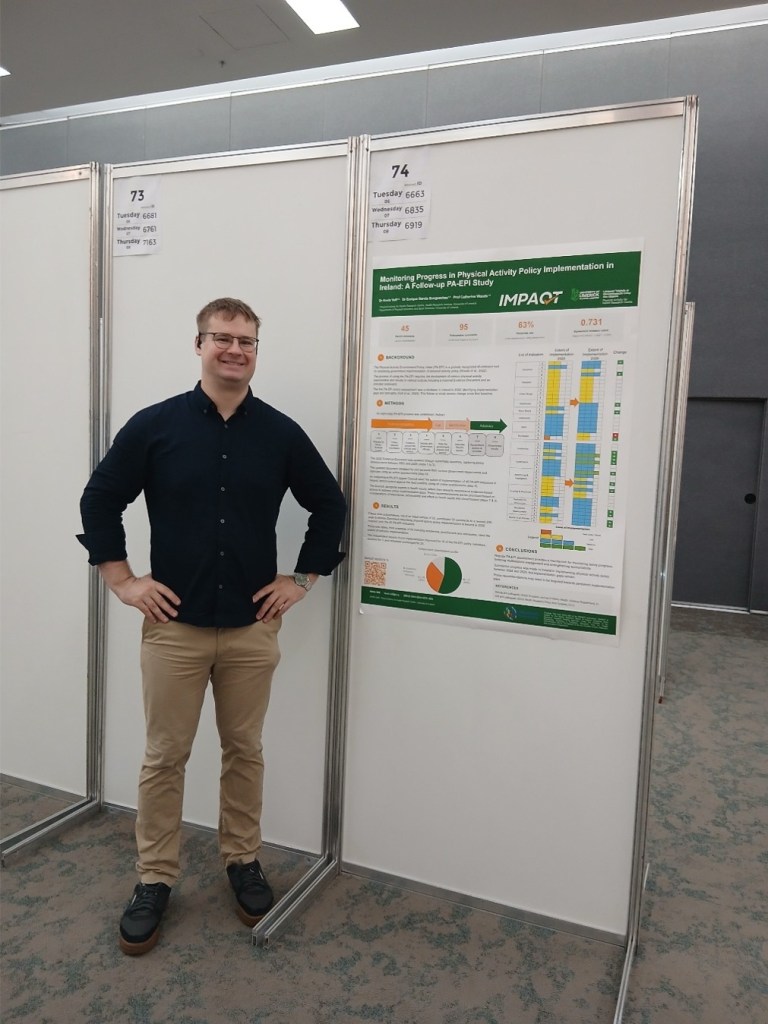
Directly after the keynote, Kevin Volf presented a poster on a follow-up PA-EPI study in Ireland. Independent experts found that implementation had improved for 16 of the 45 PA-EPI indicators since the 2022 baseline, declined for one and remained unchanged for 28. Later that day, Adrian Bauman presented on the commercial determinants of physical activity and sport.
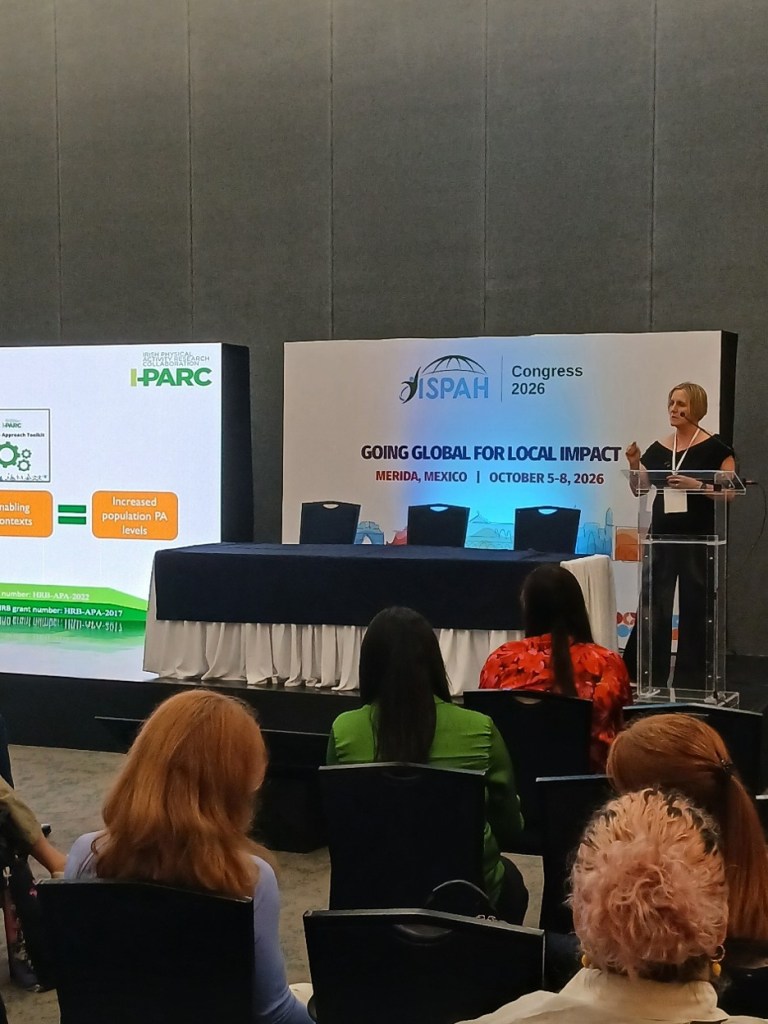
On Thursday 8th October, Juliana Mejía Grueso presented a poster with results from the Global Observatory for Physical Activity (GoPA!), which compiles country-level data on physical activity surveillance, policy and research into standardised Country Cards and Kwok Ng presented a poster on physical activity trackers. Catherine Woods presented the work of the Irish Physical Activity Research Collaboration (I-PARC) and its physical activity programme repository, an initiative that also featured among the IMPAQT Best Practice Exemplars presented on Tuesday.
Why attend a conference like ISPAH?
ISPAH brings together the global physical activity community, so presenting there puts PESS research in front of the people best placed to use it, question it and build on it. This year’s focus on equity was a chance to share lessons from Ireland and Europe, and to hear how colleagues in Latin America and beyond are tackling the same challenges in very different contexts. Presenting on behalf of colleagues who could not travel also kept the wider IMPAQT team’s work visible, strengthening the collaborations that help UL’s research inform physical activity policy and practice in Ireland and internationally.
Discover more from PESS News & Information
Subscribe to get the latest posts sent to your email.
